For new macro traders, the temptation is always to focus on the headline. Did the central bank hike, cut, or hold? That is understandable, but it is also incomplete. The more important question is often this what did the central bank validate?
A central bank can hold rates steady and still deliver a hawkish message. It can keep the policy rate unchanged while acknowledging inflation risks, refusing to push back against higher market-implied rates, or signaling that the next move could still be higher. That is what we call a hawkish hold.
The week we get a live case study. The Federal Reserve held its target range yesterday at 3.50%–3.75%, but its statement highlighted uncertainty from the Middle East and said the Committee would assess incoming data, the outlook and the balance of risks. The vote also exposed internal tension, one dissenter preferred a cut (muppet-Miran), while three others supported holding rates but objected to retaining easing-bias language. That is not a clean dovish hold, it is a divided hold in a world where inflation risk has re-entered the policy debate.
The Bank of Canada also held its policy rate at 2.25%, but its April Monetary Policy Report said oil prices had risen since the Middle East war began, pushing inflation up and increasing uncertainty. It projected inflation to rise in the near term before moving back toward 2% in early 2027. Again, the headline was “hold,” but the macro message was more complicated, where energy is lifting inflation at the same time growth remains fragile.
This is the environment aspiring macro traders need to learn to decode. The market is not trading a simple “rates up, stocks down” story. It is trading a messy supply shock, oil and gasoline are raising inflation risk, central banks are reluctant to cut, growth is not yet collapsing, and equity markets are still leaning heavily on the AI and semiconductor growth story.
The lesson is simple: macro trading starts with regime identification, not event prediction.
Skill covered below: Regime, Transmission, Validation, Pricing, Correlations, Scenarios, Monitors
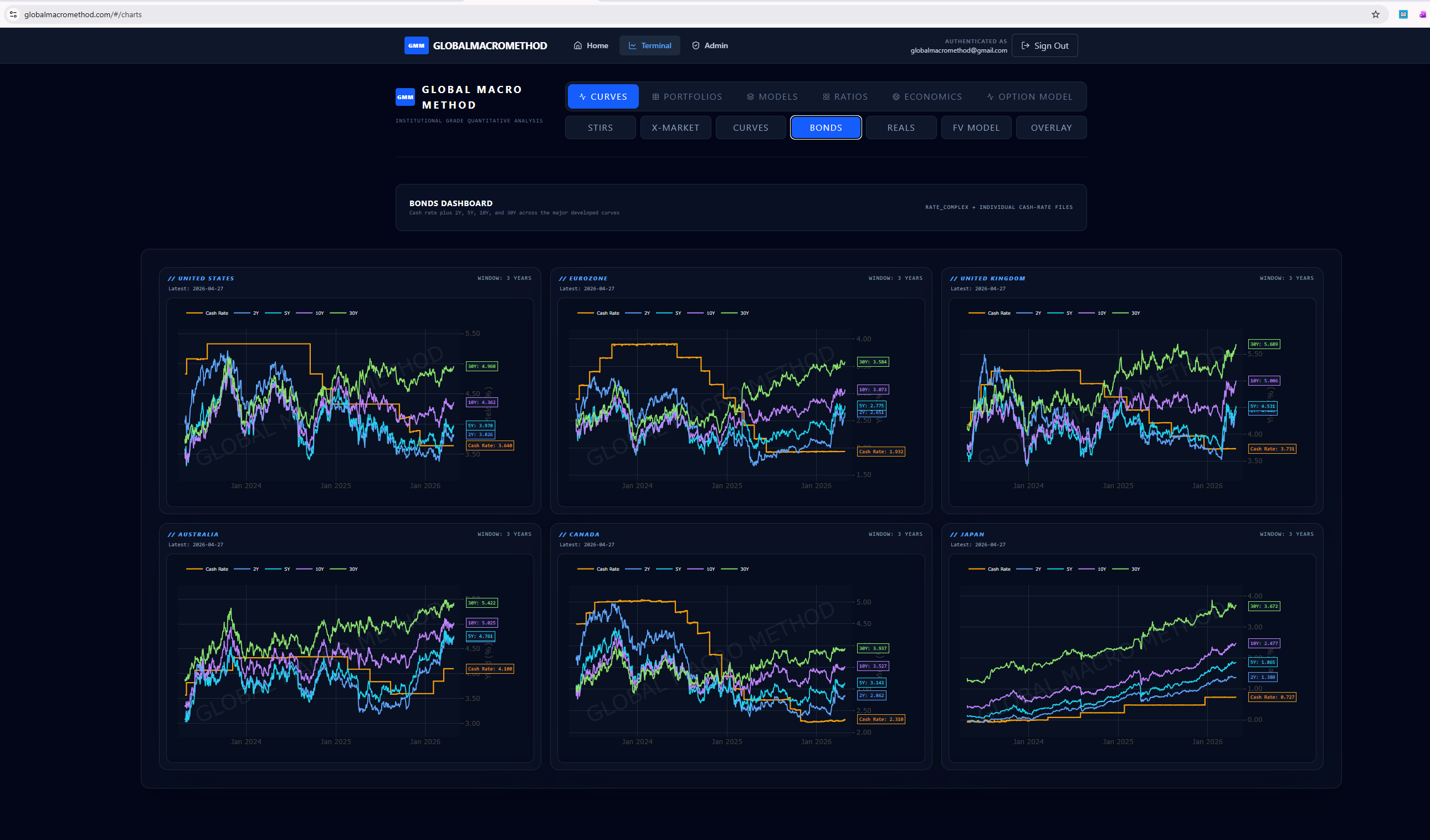
Website is a must have for any serious tradors.
Extras given at the end of the article - YouTube video with PTJ and the Goldman Sachs pre ECB report.