

Bull Flattening Is the Regime. The Job Now Is to Spot the Exit.
It’s very clear to me we’re living in a bull flattener: the long end is being bid like it’s the shock absorber of the cycle, while the front end is held hostage by a policy path that hasn’t fully conceded yet. In plain English: duration is getting paid, and the curve is flattening because the market is expressing uncertainty about the growth path more confidently than it’s expressing conviction about imminent easing.
That’s the what. The more investable question is the next what:
What are the markers that tell us the bull flattener is ending, and which regime we’re rotating into?
From where I sit, there are three clean exits:
Bull flattener —> Bull steepener
Bull flattener —> Bear flattener
Bull flattener —> Bear steepener
Each has a different mechanic, a different set of catalysts, and crucially a different market behaviour that confirms you’re not just watching noise.
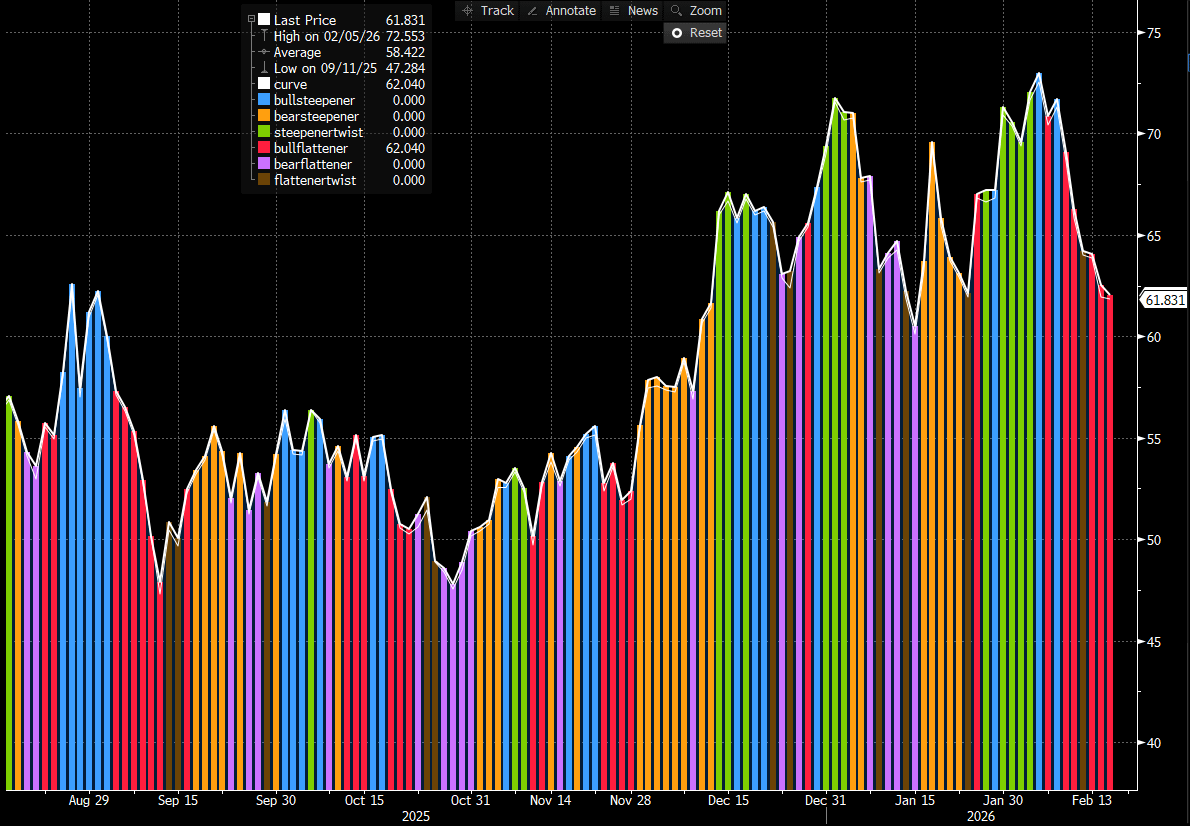
Below is how I frame it and what I watch.
Global Macro Method “GMM” website (www.globalmacromethod.com) is live for annual subscribers and will be open to all paid subscribers later this week in conjunction with a 10% increase in pricing.
Right now the tape is noisy and the macro is conflicted, which is exactly when regime shifts begin. Below, I walk through how I’m filtering signal from narrative, pull it all together with my view, and show real-time examples of what I’m watching and what needs to happen before I size up.
First, define the bull flattener properly
A bull flattener is the curve saying some version of, in the most simply way:
Growth risk is rising (or policy is tight enough to create it).
The long end should rally because the terminal economic outcome is disinflationary / slower and lower.
But the front end doesn’t rally as hard yet because the Fed hasn’t been forced to validate cuts (stuck between rock and hard place with dual mandate).
So the curve flattens in a rally because the back end is doing more of the heavy lifting.
That’s the starting point. Now… How does it end?
Exit #1: Bull flattener to Bull steepener
The pivot from duration bid to policy-path repricing
Mechanic: The market shifts from buying duration as protection to pulling cuts forward aggressively. In other words, the front end finally breaks and rallies harder than the long end.
This is the curve moving from something might break to something did break and the Fed will respond.
What changes (the fundamental tells)
This transition needs confirmation. Not fear. Like actual confirmation!
Growth downside becomes real, not hypothetical.
It’s not one weak print. It’s a cluster: labor cooling, spending rolling, surveys failing to rebound.The Fed reaction function becomes clearer / more dovish.
Not data dependent. Not higher for longer. More like we see the risks balancing and we are prepared to act.Financial conditions tighten enough that the 2Y collapses relative to the 10Y.
That’s key, the front end doesn’t truly rally hard unless the market believes the Fed must validate the move.
Market tells
This is what I want to see if the move is real
Whites/reds outperform (front-end rate futures lead the rally).
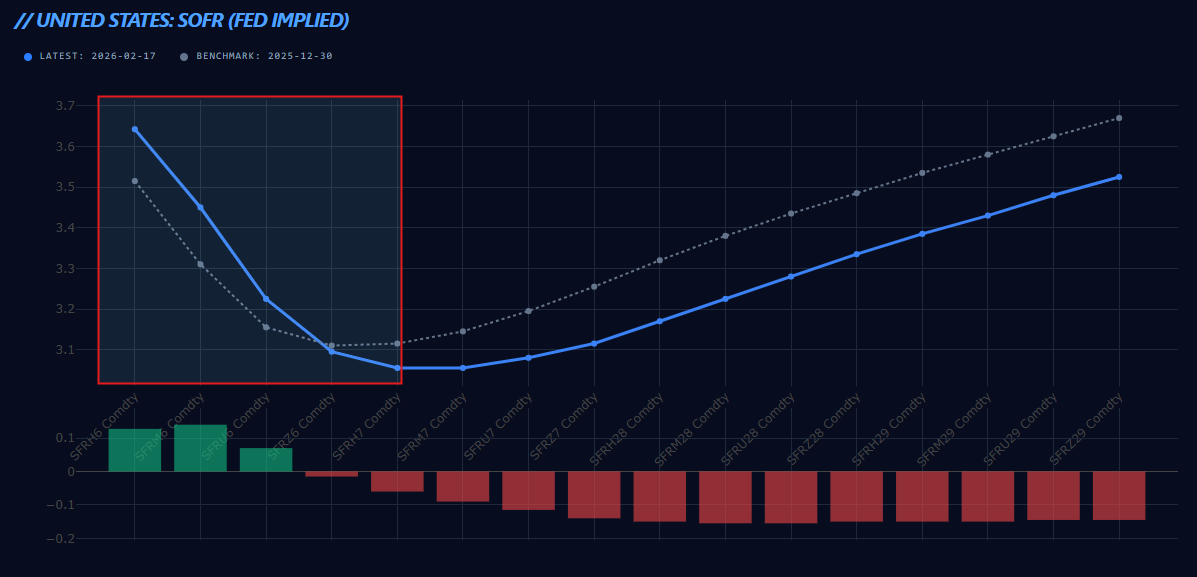
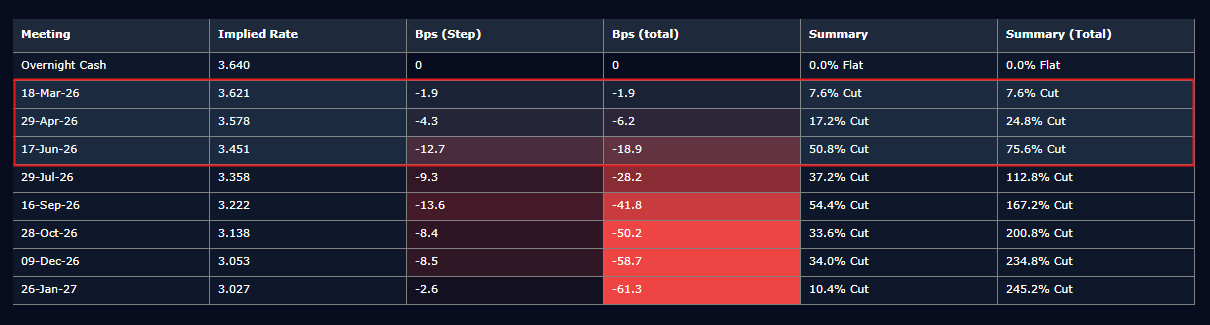
OIS cut probabilities jump and reprice toward earlier and/or deeper cuts.
2Y yields drop hard relative to 10Y, a classic “front-end capitulation” rally.
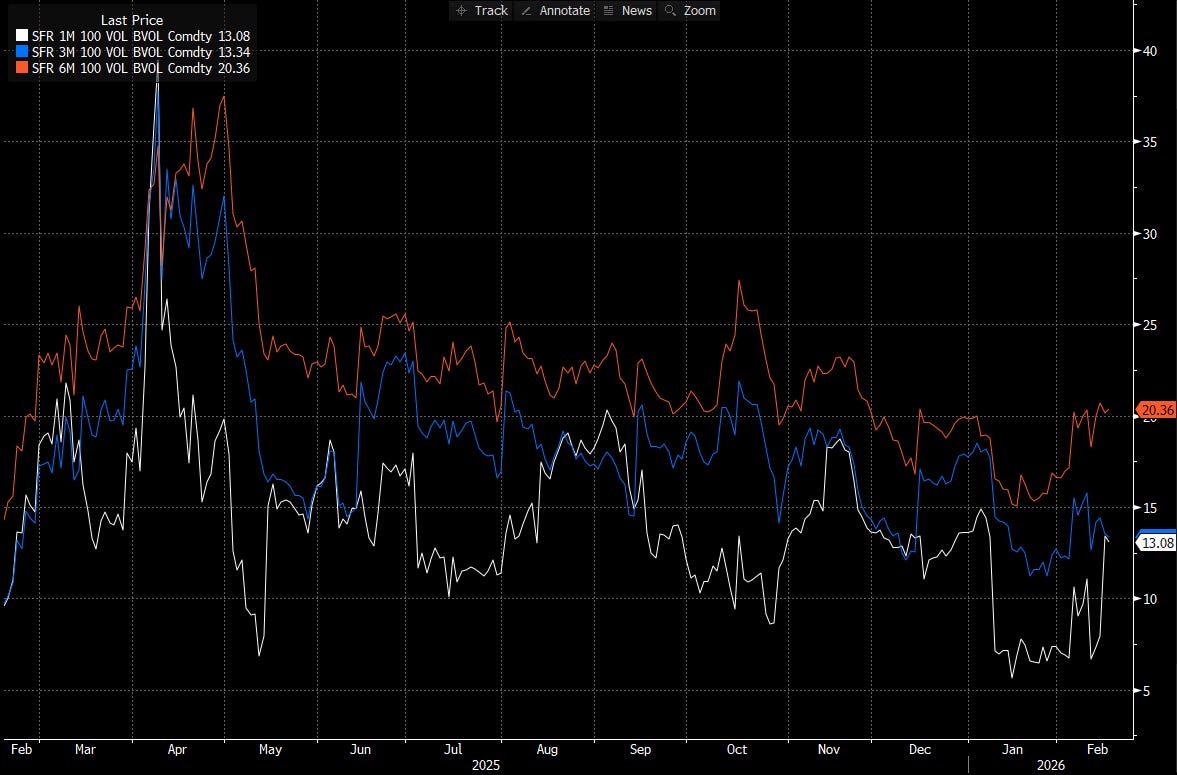
Front-end vol can actually rise initially (because the market is aggressively repricing path), even as yields fall.
The practical positioning implication
This is the regime where being long the front end (or long the policy pivot expression) stops being an intellectual view and becomes a carry + convexity trade with reinforcement from the macro theme.
