Markets are no longer pricing an easing cycle. They are pricing central banks that may need to take back optionality. In the following writeup I explore the current state along with the path to the coming meetings.
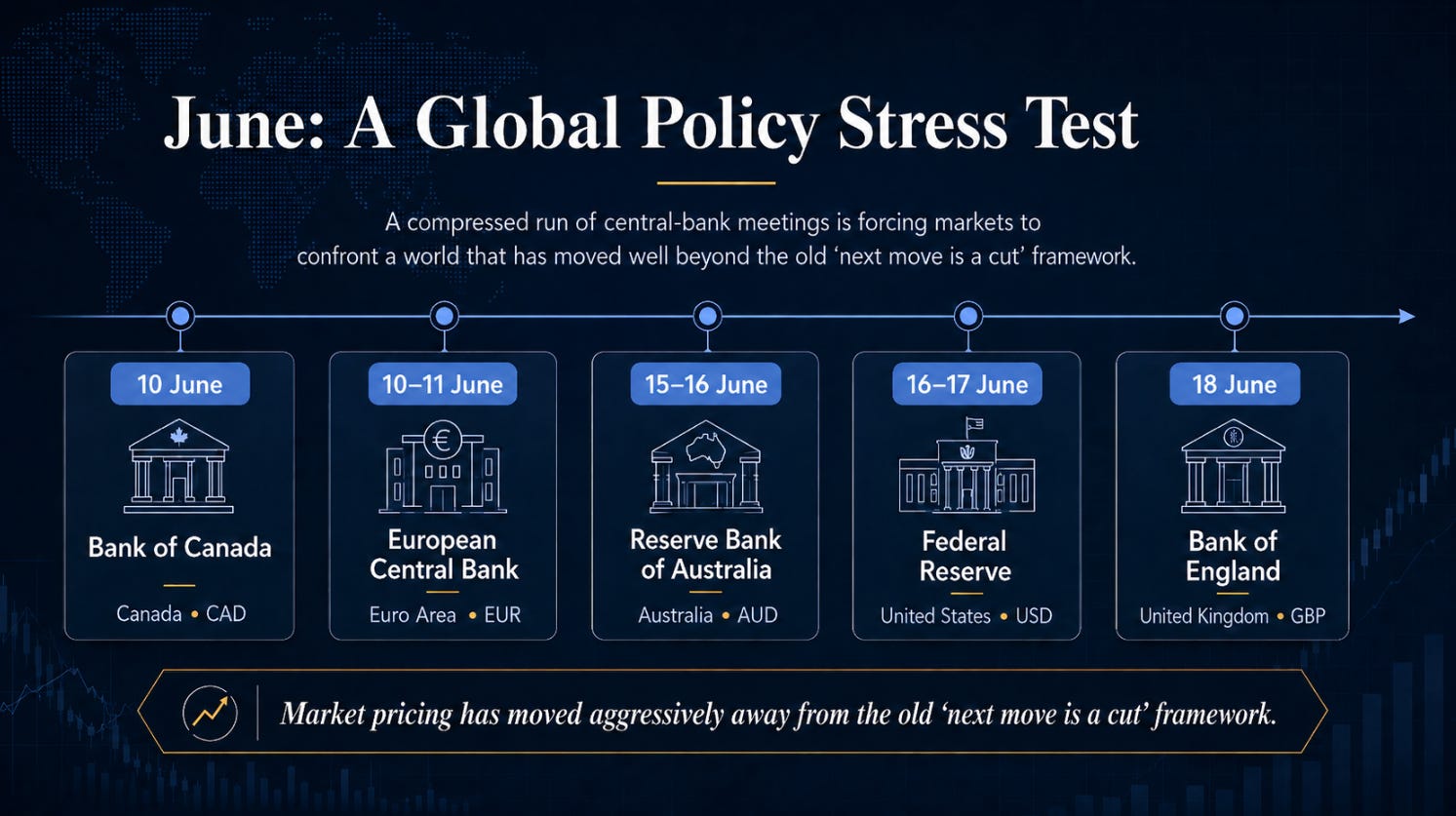
June is becoming a global policy stress test. Within a compressed window, the Bank of Canada (BoC), European Central Bank (ECB), Reserve Bank of Australia (RBA), Federal Reserve (FED) and Bank of England (BoE) all meet with market pricing having moved aggressively away from the old “next move is a cut” framework. The sequence starts with the BoC on 10 June, the ECB on 10–11 June, the RBA on 15–16 June, the FOMC on 16–17 June, and the BoE on 18 June.
The market is not pricing identical cycles. The ECB is the most front-loaded, with roughly a full hike priced for June and around 60bp of cumulative tightening by early 2027. The BoE curve has little priced for June but meaningful tightening later, with roughly 40bp-plus cumulative by February 2027. Canada is not priced as an immediate June hike, but the CORRA curve still embeds around one full hike by year-end. The Fed is also close to flat for June, but the SOFR curve carries roughly one hike by March 2027. Australia is near-flat for June after the May hike, but still carries residual tightening premium.
That is an important macro shift. The global policy debate has moved from “when do cuts restart?” to “how many central banks need to re-tighten into a supply shock?”
This is not a clean demand boom. It is a more difficult regime: energy prices, tariffs, shipping disruption, fiscal pressure and supply-chain friction are lifting inflation risk, while labour markets are no longer uniformly strong. Central banks are being asked to respond to inflation that is not purely domestic demand-driven. That is a less equity-friendly and more volatility-friendly macro mix because monetary policy can lean against second-round effects, but it cannot produce oil, ships, workers or productivity.
The key question for us real risk takers is therefore not simply whether central banks hike in June. It is whether policymakers validate the aggressive curve pricing, push back against it, or deliberately restore a two-sided reaction function.
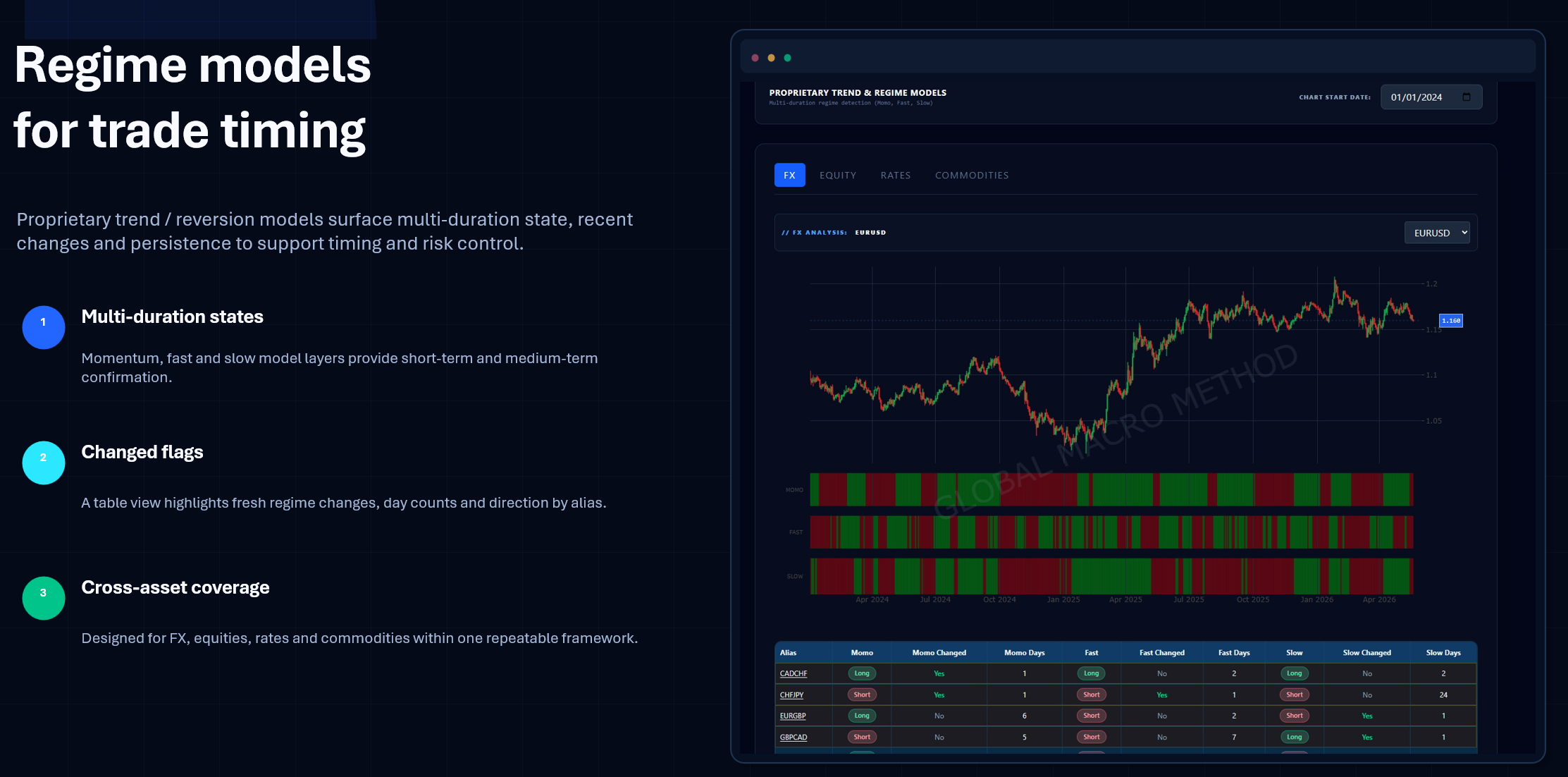
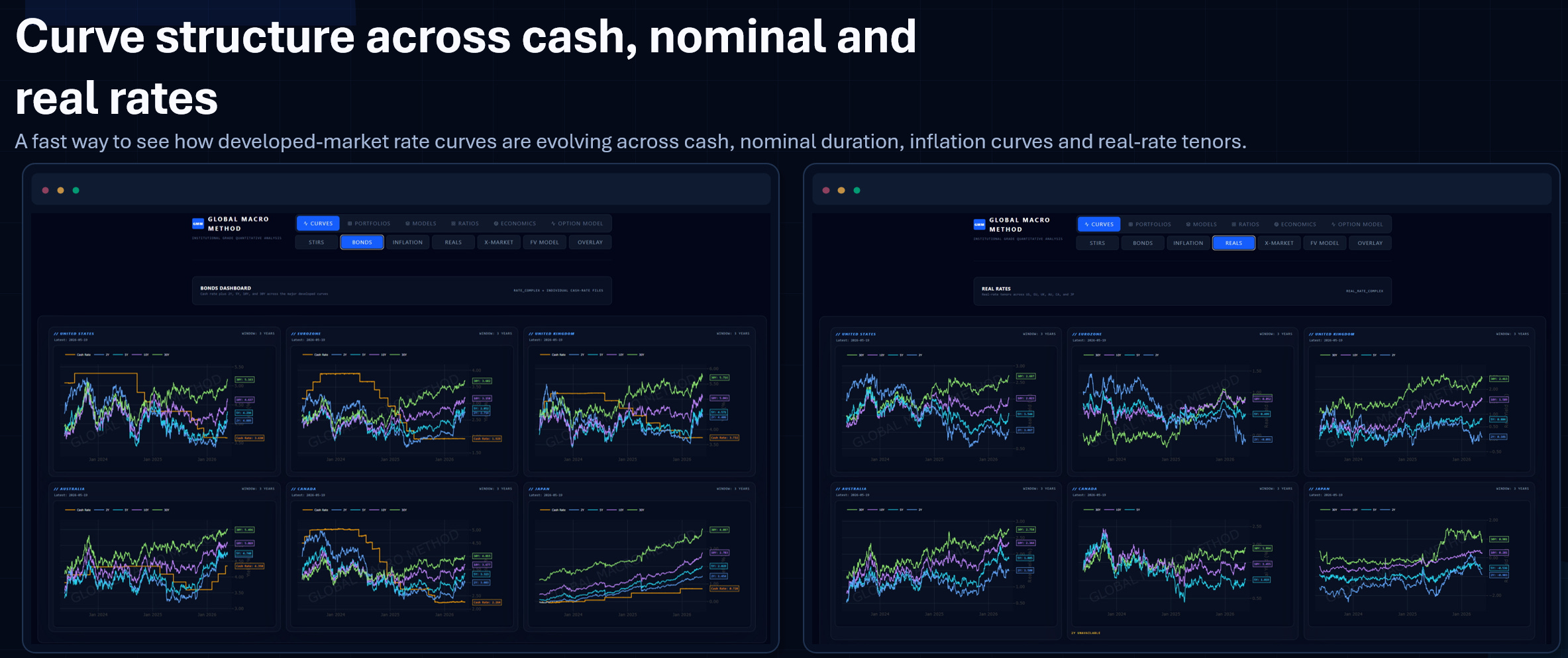
Become a paid subscriber to gain access to a bespoke website with model and curves for G7 Rate, Bonds, Equities, FX and Commodities. I also share my trades and the supporting thesis along with the wider macro framework and research.