

The market has already stopped trading this as a one-dimensional oil scare. It has started trading it as policy constraint. That is progress, but it is still incomplete. Rates and FX have already moved as if central banks have less room to reassure. Much of broad risk still behaves as though the system can absorb a more restrictive curve, a firmer dollar, and higher real yields without eventually paying for it in credit, housing, consumers, and earnings. That is why I do not think this is mainly an oil story anymore. Oil was the catalyst. The real trade now sits in the sequence that follows.


The regime picture matters more than the latest headline because this is no longer just a one-day panic signature. We are already sitting in the stagflation box, stocks down, yields up, dollar up. Once that state persists beyond a brief shock window, I stop asking whether this is merely war noise. I start asking whether the market is about to move from pricing constraint into pricing consequence. That is a much more important question, because one can be absorbed for a while. The other usually turns into a broader repricing of risk.

You can see the shift most clearly in the front end. SOFR no longer carries the old easy-cuts glide path, and Euribor and Sonia have moved even more aggressively. I do not read that literally as a clean call that every central bank is about to hike again. That is too mechanical. I read it as something more durable: cuts are no longer the anchor. “Hold longer, cut later” is already enough to tighten the discount-rate regime. Policymakers do not need to deliver every basis point the market has flirted with. They just need to be less free to sound reassuring.
That is why I think the market keeps circling the wrong tactical question. It keeps asking whether the Fed, ECB, or BoE might need one more hike. That matters, but it is not the main thing. The more important question is what happens once higher real yields, a firmer dollar, and a more restrictive curve stay in the system long enough to do what tighter financial conditions always do, hit refinancing, capex, housing, discretionary spending, and eventually earnings. In that sense, this is not mainly an oil story. Oil is the spark. Cost of capital is the transmission mechanism.
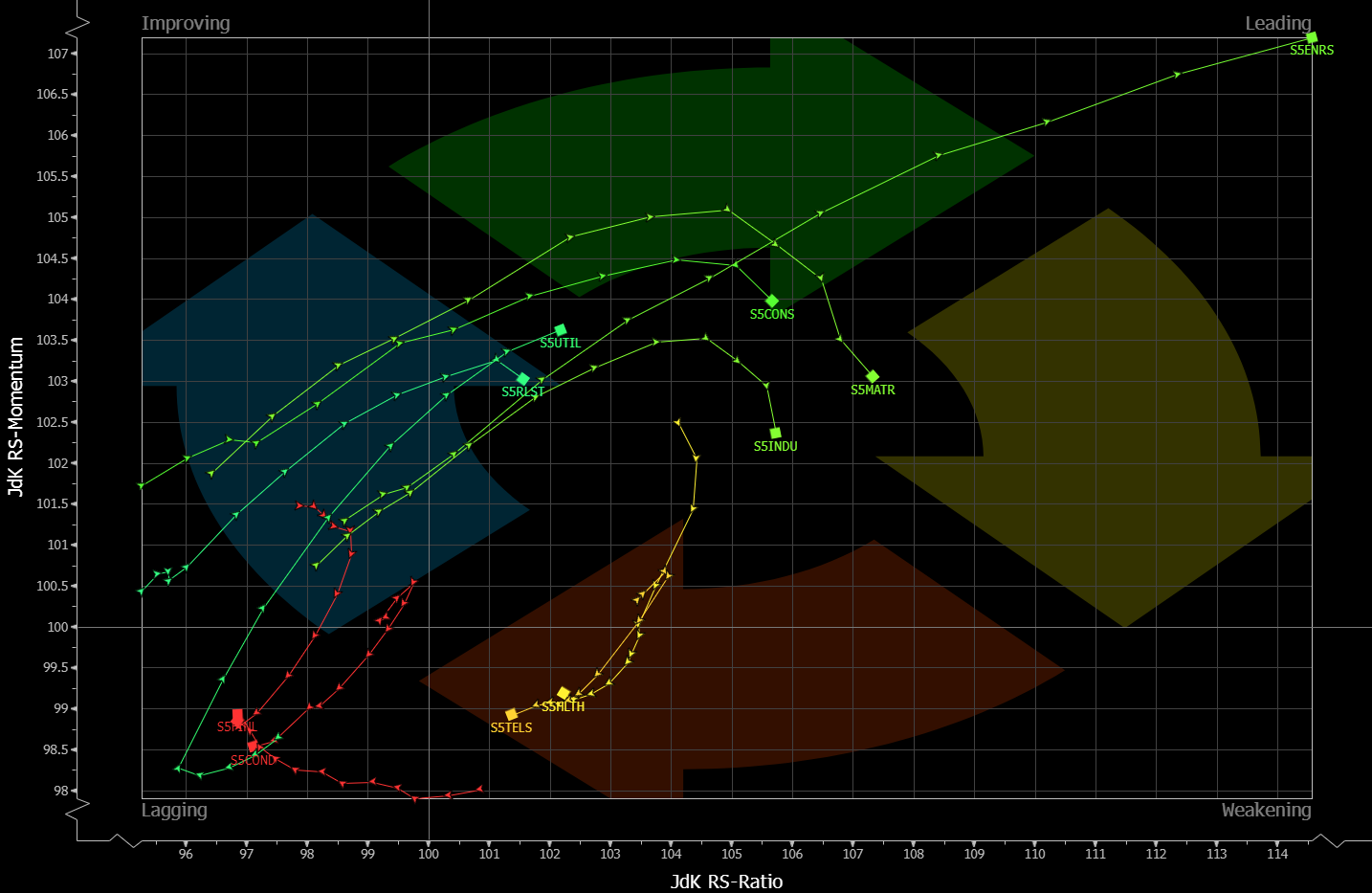
That is also why the tape looks more fragile than the headline indices suggest. Rates and FX have already adjusted. Equity leadership has already rotated. Energy and defensives have behaved like inflation and balance-sheet hedges. Duration-heavy growth and consumer-sensitive risk have already started to wear the strain. Credit, by contrast, still looks too comfortable. That is not a small detail. It is one of the most important tells in the whole setup. The market is acknowledging the regime change, but it has not fully priced the second-round consequences of living inside it.
Europe and the UK still look like the cleanest weak links. Not in the lazy, symbolic sense of being “more exposed,” but in the practical sense that the transmission is easier to see there first. Imported energy sensitivity is more obvious. Underlying growth is softer. Household transmission is cleaner. The curve can do a lot of tightening on its own even if the central bank ultimately validates less than the market initially fears. That is the point. The damage does not need a heroic hiking cycle. It only needs a more restrictive environment to stick around for longer than risk assets are comfortable with.
So my view above the paywall is straightforward. The front end has probably been the early move, not the late one. The real mispricing now is not whether the market can squeeze a few more hawkish basis points into policy paths. It is whether broad risk has properly priced the cost of living with that constraint. That is the real state question from here, and it is where the trade map actually starts to matter, that I explain below…
