

Softer inflation meets an oil shock & credit still refuses to price it.
US inflation cooled, but crude jumped roughly 16 per cent, semiconductor leadership broke down and credit spreads barely moved. The coming week will test whether that calm reflects genuine resilience or a market that has not yet caught up with the risks.
A roughly 16 per cent weekly rise in crude should not sit comfortably beside a two-basis-point widening in US high-yield spreads. Yet that is where markets stood by week’s end, Brent settled on Friday at US$88.10, WTI at US$82.49, while the latest available high-yield option-adjusted spread was 2.71 per cent on Thursday, only marginally wider than a week earlier.
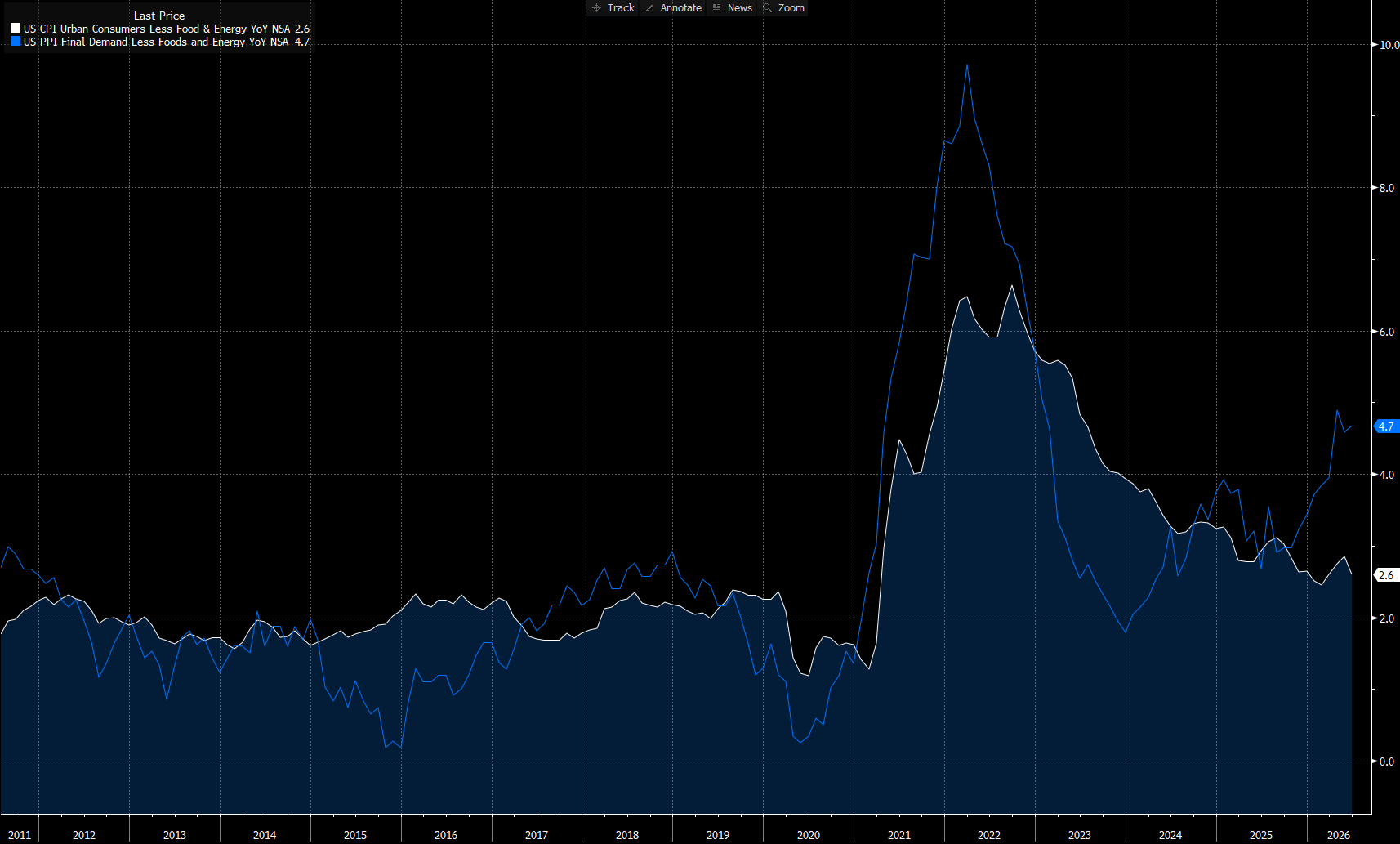
That mismatch is the week’s real story. June US inflation delivered genuine relief, headline CPI fell 0.4 per cent over the month, core CPI was unchanged and annual core inflation eased to 2.6 per cent. Producer prices also fell. In a quieter week, that would have been enough to make the disinflation narrative dominant.
Instead, the data arrived as renewed US–Iran hostilities repriced energy, the Philadelphia Semiconductor Index entered a bear market and Fed officials resisted treating one softer month as decisive. Realised inflation improved just as prospective inflation risk worsened.
Markets did not choose between those signals, they distributed them unevenly. Treasuries barely moved, the dollar softened modestly, equities fell and credit remained almost entirely composed. That is not a coherent macro verdict. It is a set of markets working with very different assumptions about how long the oil disruption lasts, how much pricing power companies retain and whether the AI-led correction remains contained.
The Week That Was
The inflation relief was real, but its timing matters. Energy fell 5.7 per cent in June’s CPI and 6.4 per cent in the producer-price report, doing much of the work behind the softer headline numbers. Shelter inflation slowed to 0.1 per cent for the month, which is the more durable and encouraging signal. But June’s releases describe conditions before crude surged in July. They reduce the case for immediate Fed action; they do not settle the inflation outlook for later in the year.
Demand also gave the Fed no reason to rush. Retail sales rose 0.2 per cent in June, initial jobless claims fell to 208,000 and industrial production edged up 0.1 per cent. University of Michigan consumer sentiment improved to 54.4, while one-year inflation expectations eased to 4.2 per cent. This is still a picture of resilient, late-cycle activity rather than an economy asking for policy relief.
That distinction shaped the Fed message. Dallas Fed President Lorie Logan argued for “modestly higher” rates, while Chair Kevin Warsh offered little fresh guidance and cautioned against drawing a policy conclusion from one month’s data. The immediate question is therefore not whether the Fed must respond to June inflation. It is whether a persistent oil shock, still-firm demand and elevated expectations keep September tightening risk alive despite the softer core print. The next FOMC meeting is on 28–29 July.
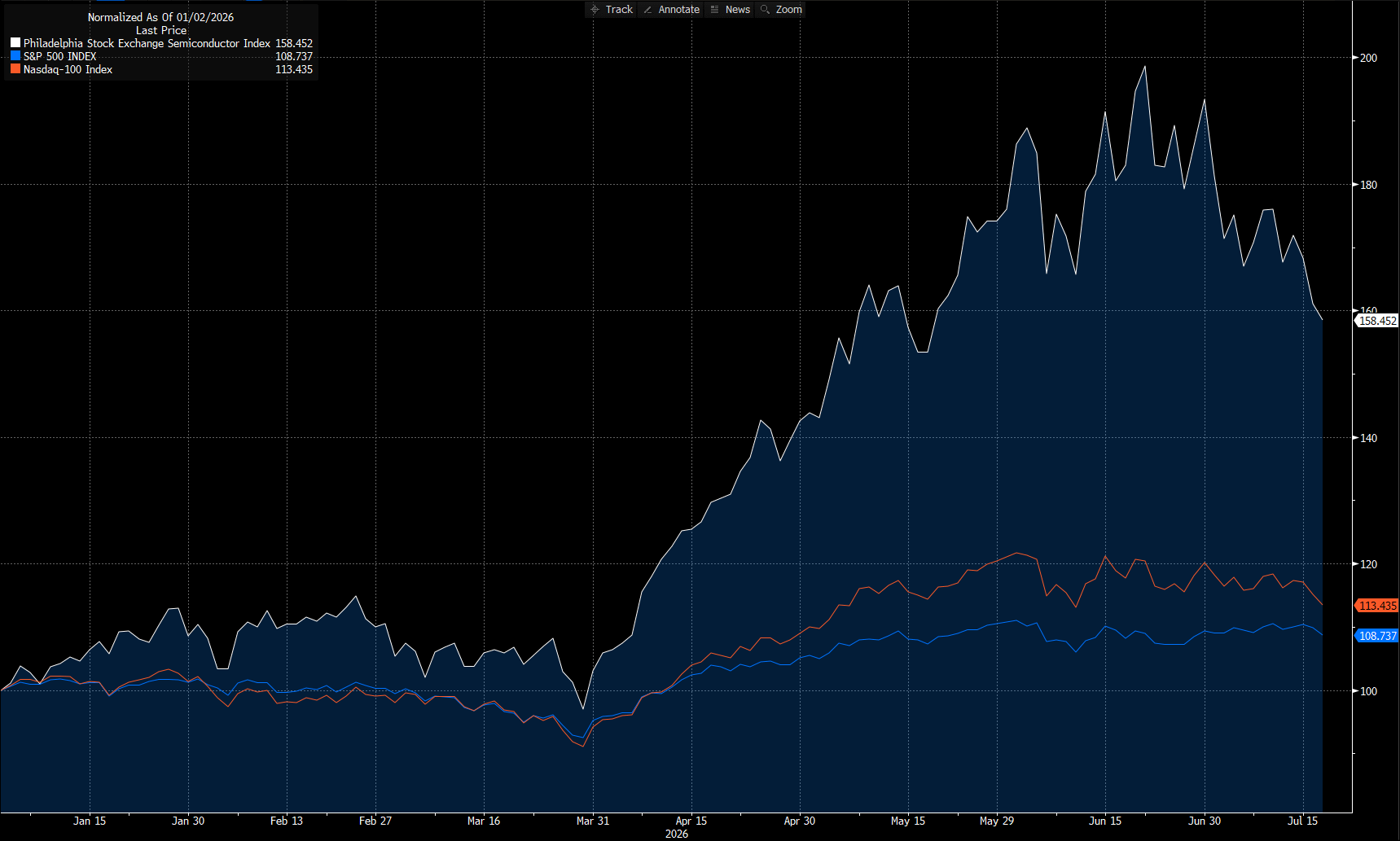
The equity sell-off also changed character. The Philadelphia Semiconductor Index finished 20.2 per cent below its 22 June high after losing more than 18 per cent in July, while the S&P 500 and Nasdaq both ended the week lower. This was not yet a broad funding event: the VIX closed at 18.77 and investment-grade and high-yield spreads widened by only one and two basis points respectively. But it was a warning that the market’s most crowded growth narrative can weaken at the same time as the macro discount rate becomes harder to forecast.
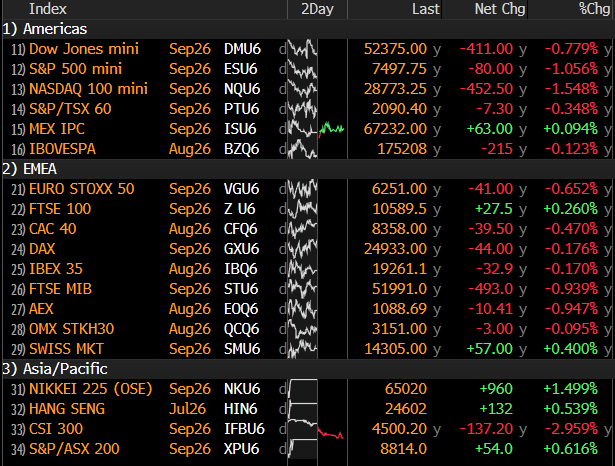
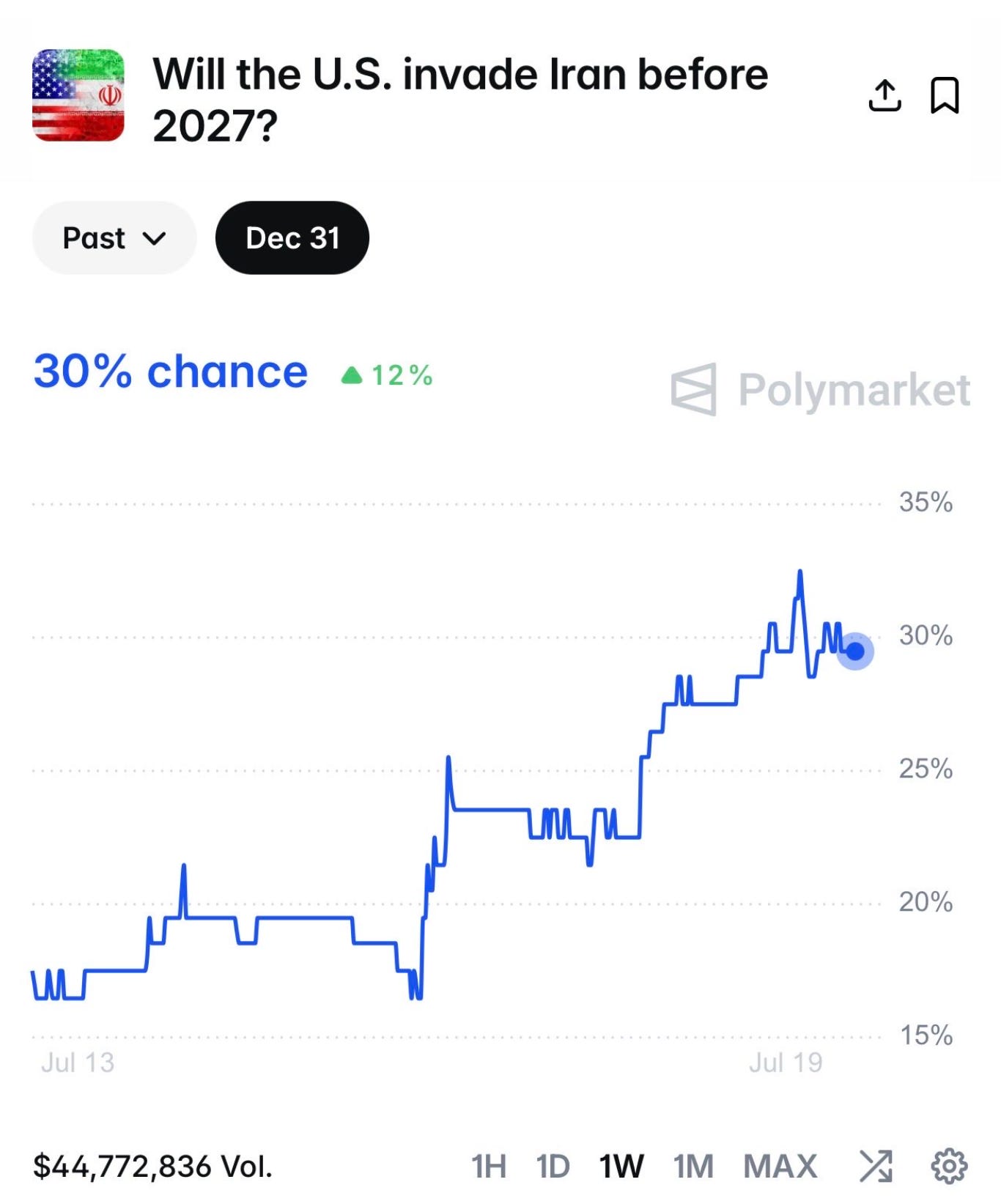
By Sunday, the geopolitical risk had intensified again. The US said it had completed an eighth consecutive night of attacks on Iran after two American service members were killed in Jordan and another was reported missing. The coming week therefore begins with a contradiction that is becoming harder to ignore: oil and equity leadership are signalling greater fragility, while credit is still priced for very little disruption. One of those markets may have to concede.
Below the paywall, I examine why June’s inflation relief is less dovish than it first appears once the oil timing is considered; what near-static Treasury yields, a semiconductor bear market and immobile credit spreads reveal about the market’s underlying assumptions; and how the ECB decision, UK wages and CPI, Japan’s national CPI, global flash PMIs and major technology earnings fit together. I also set out the base case, the two credible ways it could break, and the specific signals in Brent, high-yield spreads, market breadth and USD/JPY that would change the view.
Enjoying what you’re reading? Subscribe to unlock the full article and support our independent research. Paid subscribers also receive exclusive access to additional tools, analysis, and resources (models, curves, charts) at www.globalmacromethod.com.
