

The next opportunity isn’t necessarily about calling the next hike. It’s about deciding how much tightening the economy can actually absorb.
By Friday, I was less interested in debating the Fed’s hike and more interested in what comes after it. Wednesday’s quarter-point increase took the target range to 3.75–4.00%, with policymakers pointing to resilient spending, strong investment and persistent inflation.
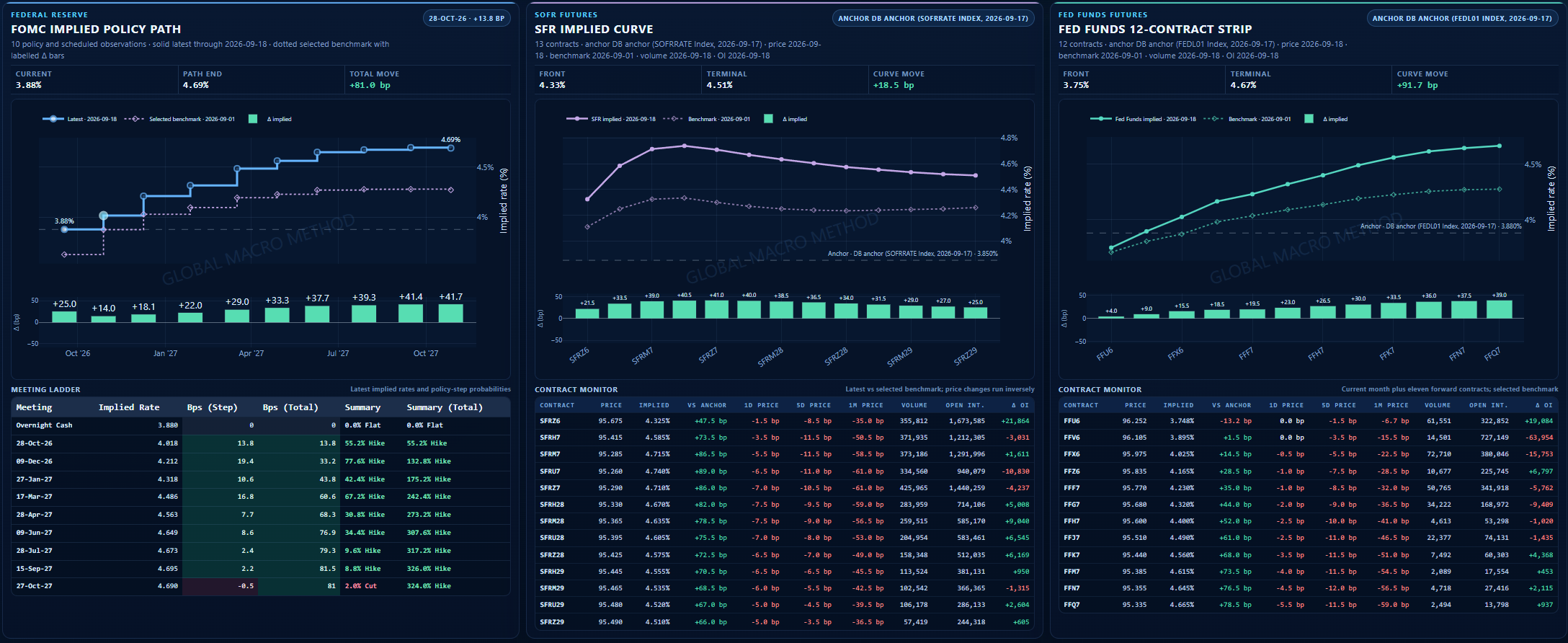
I understand why they moved. But an economy that can absorb another hike isn’t automatically an economy that can absorb an extended tightening cycle. That distinction is where I think the next useful debate sits.
I’m heading into the coming week respecting the resilience in the data, without assuming it lasts indefinitely. The question is whether higher costs and borrowing rates leave demand intact, or gradually undermine the strength that allowed the Fed to move.
The week that was: resilient, but not everywhere
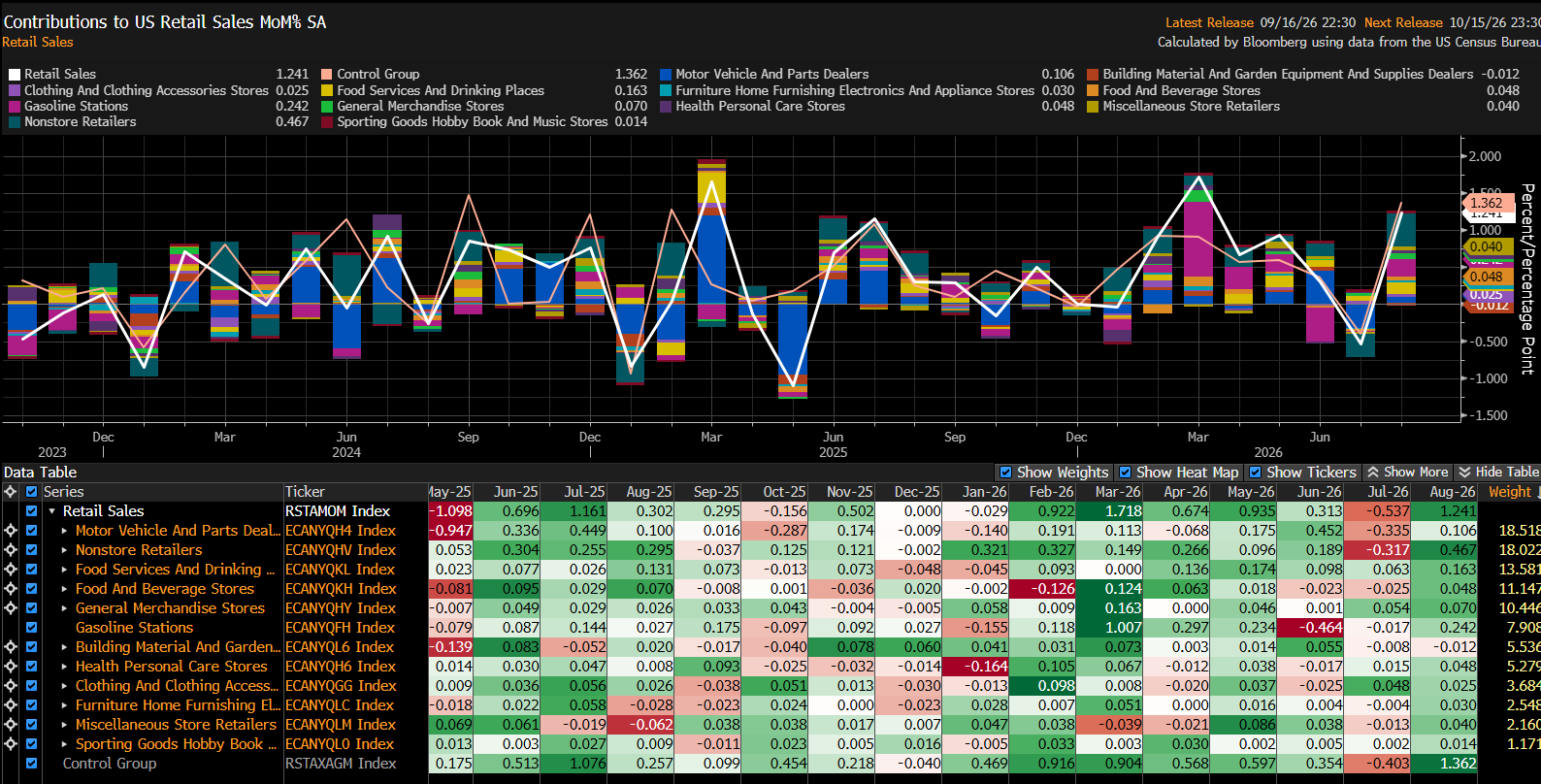
The consumer made life awkward for anyone positioned for an immediate slowdown. August retail sales rose 1.2%, with the control group up 1.4%. Initial jobless claims fell to 196,000. Taken together, those releases gave me little reason to expect an urgent policy reversal.
Still, I wouldn’t turn one spending rebound into a fresh boom. Retail sales are nominal and followed a weak July. Meanwhile, manufacturing output fell 0.3% in August. My read is an economy with enough strength to keep moving, but not one where every sector is accelerating together.
The Fed’s projections capture that tension. The median year-end path points to another quarter-point hike this year and no net easing in 2027, alongside solid growth and unemployment around 4.1%. That’s a forecast of resilience, not an imminent policy mistake. But it leaves the market having to judge whether inflation can improve without a more meaningful loss of momentum.
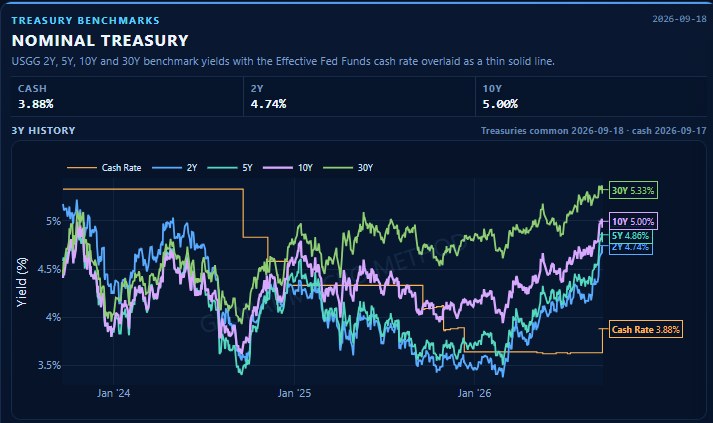
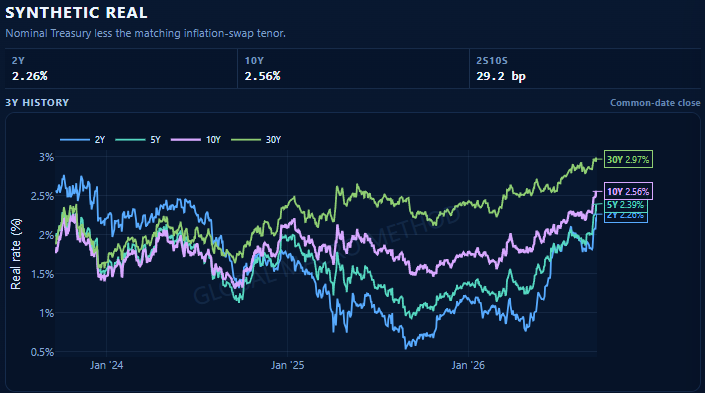
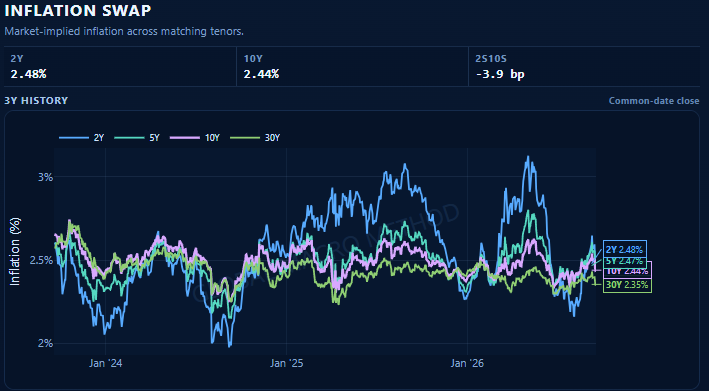
What interested me most was the composition of Wednesday’s bond move. Ten-year real yields rose six basis points while ten-year inflation fell five. I read that as consistent with investors pricing more restraint and less long-term inflation compensation, rather than simply losing confidence in inflation control. Daily moves aren’t a clean experiment, but the distinction matters.
It’s why I’m uncomfortable with “the Fed is hawkish, therefore sell every bond”. A central bank can push expected short rates higher while reducing the inflation premium further out. Getting the policy direction right doesn’t automatically mean getting the curve expression right.
Equities offered another reason to avoid broad conclusions. The Nasdaq gained 0.7% over the week while the Russell 2000 lost 1.5%. Yet high-yield spreads were only five basis points wider through Thursday than the previous Friday. I see selective confidence, not a convincing market-wide growth endorsement, but not a credit crisis either.
Energy is the complication running through all of this. US diesel reached $6.285 a gallon in the latest weekly data, up almost 32 cents. For me, the issue isn’t just another uncomfortable inflation print. It’s whether businesses can pass those costs on or have to absorb them through margins, hiring and investment.
That’s the fork in the road, persistent pricing power could extend the tightening cycle, fading demand could eventually limit it. Higher energy costs don’t tell us which outcome wins on their own.
Below, I’m working through the releases that could separate those outcomes, where I’d look for opportunities in rates, and what would make me change my mind. Subscribe to Global Macro Method for the full week-ahead view.
