

4 October 2026 | Reviewing 28 September–2 October and looking ahead to 5–9 October
The question I’m taking into the new week is whether the US economy can cool enough to take pressure off the Fed without cooling enough to undermine earnings. That sounds like a narrow distinction, but it is where I think the useful trades are going to come from.
I’m not looking for one number that tells me to buy equities, sell the dollar or get long bonds. I want to understand how the pieces fit together, what the economy is doing, how policymakers are likely to respond, what markets have already priced, and whether the behaviour across assets supports that interpretation.
That is the point of the macro mosaic. It is not about collecting enough bullish headlines to justify a position. It is about building a view, putting the strongest opposing evidence alongside it, and deciding whether the trade still makes sense.
The Week That Was: softer hiring, resilient spending
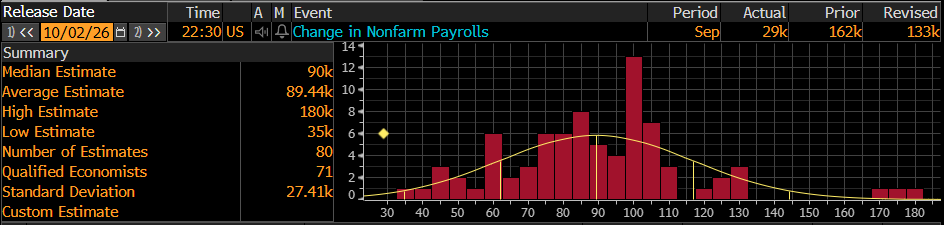
Friday’s employment report gave the Fed less reason to rush. September payrolls increased by just 29,000, while revisions removed another 60,000 jobs from July and August. The unemployment rate was 4.2%, and average hourly earnings rose only 0.1% on the month, leaving annual wage growth at 3.0%. Taken together, that is a softer labour signal than the payroll headline alone.
But I still want to separate weak hiring from widespread job losses. The August JOLTS report, released earlier in the week, showed layoffs and discharges essentially unchanged at 1.6 million. It is an older observation than September payrolls, so it cannot settle the latest direction, but it does not support the idea that employers were already shedding workers aggressively.
For me, that distinction is the bridge between the economic data and the equity market. Businesses can become more cautious about hiring without immediately destroying the income that supports consumption. That can ease pressure on monetary policy while leaving earnings relatively intact. A sustained increase in dismissals would be a different problem, weaker household income, weaker spending and, eventually, weaker revenues.
The spending data were a useful reminder not to jump ahead of that process. Real consumption increased by 0.6% in August, even though real disposable income was flat. The saving rate was 4.1%. Households were buying more, not simply paying more for the same purchases, but spending running ahead of income also raises a question about how durable that strength will be.
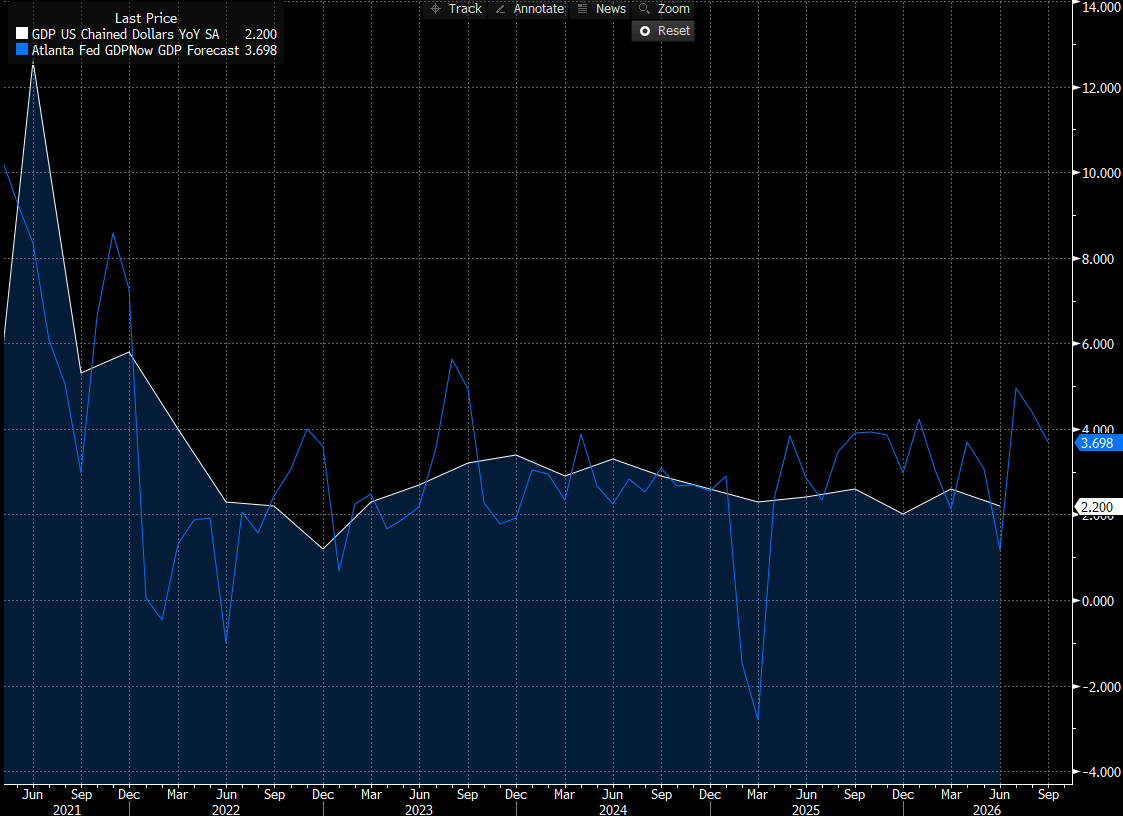
The GDP revisions reinforced the stronger demand starting point. Second-quarter growth was revised to 2.2% annualised from 1.5%, while real final sales to private domestic purchasers, consumer spending plus private fixed investment—grew at a 4.6% annualised pace. Those are backward-looking figures, not a fresh reading on October, but they make it harder to argue that underlying demand had already fallen away.
My reading is therefore cooling at the margin, not a confirmed break in the expansion. The labour market gives me a reason to question how much further tightening is required. Consumption gives me a reason not to turn that question into an outright recession trade. Both belong in the mosaic; neither gets discarded because it complicates the story.
More and More update coming this week to the website (dashboard) and better trade thesis identification writeups….
