

The week ending Friday, 24 July 2026 was not a recession week. It was a week in which resilient activity, another oil shock and rising real yields forced markets to reprice the cost of capital.
This to me matters. The Nasdaq-led decline did not coincide with a collapse in employment, a sharp deterioration in high-yield credit or an obvious break in the broader economy. Instead, the damage concentrated in the assets most exposed to duration, valuation and future cash-flow assumptions, megacap technology, AI beneficiaries, long-duration investment-grade credit and rate-sensitive equities.
The coming week will determine whether this was simply a valuation reset or the beginning of something more consequential. The Fed meets, US GDP and inflation data land, roughly one-third of the S&P 500 reports earnings, Australia releases CPI, and both the Bank of England and Bank of Japan make policy decisions.
The Week That Was: US Macro Remained Firm
The US data were stronger than the equity price action suggested.
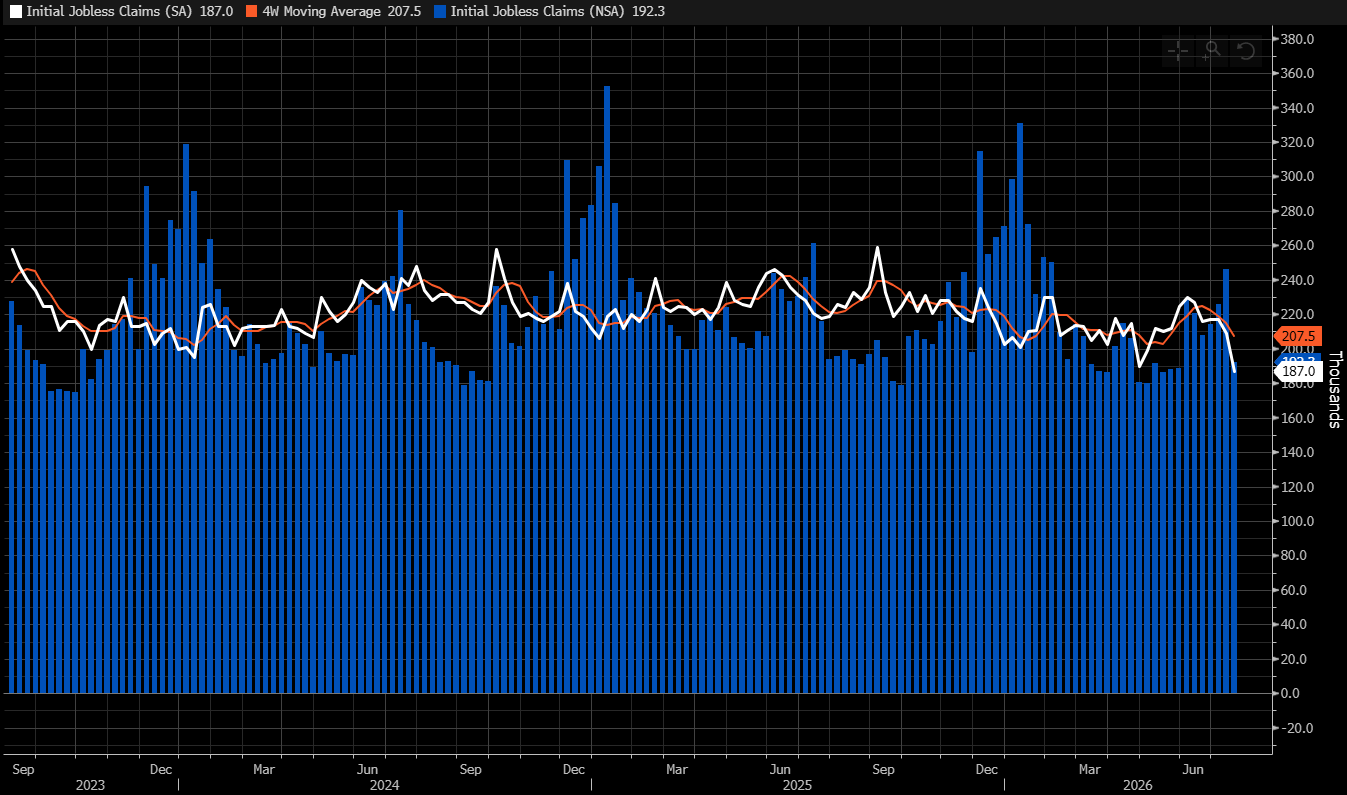
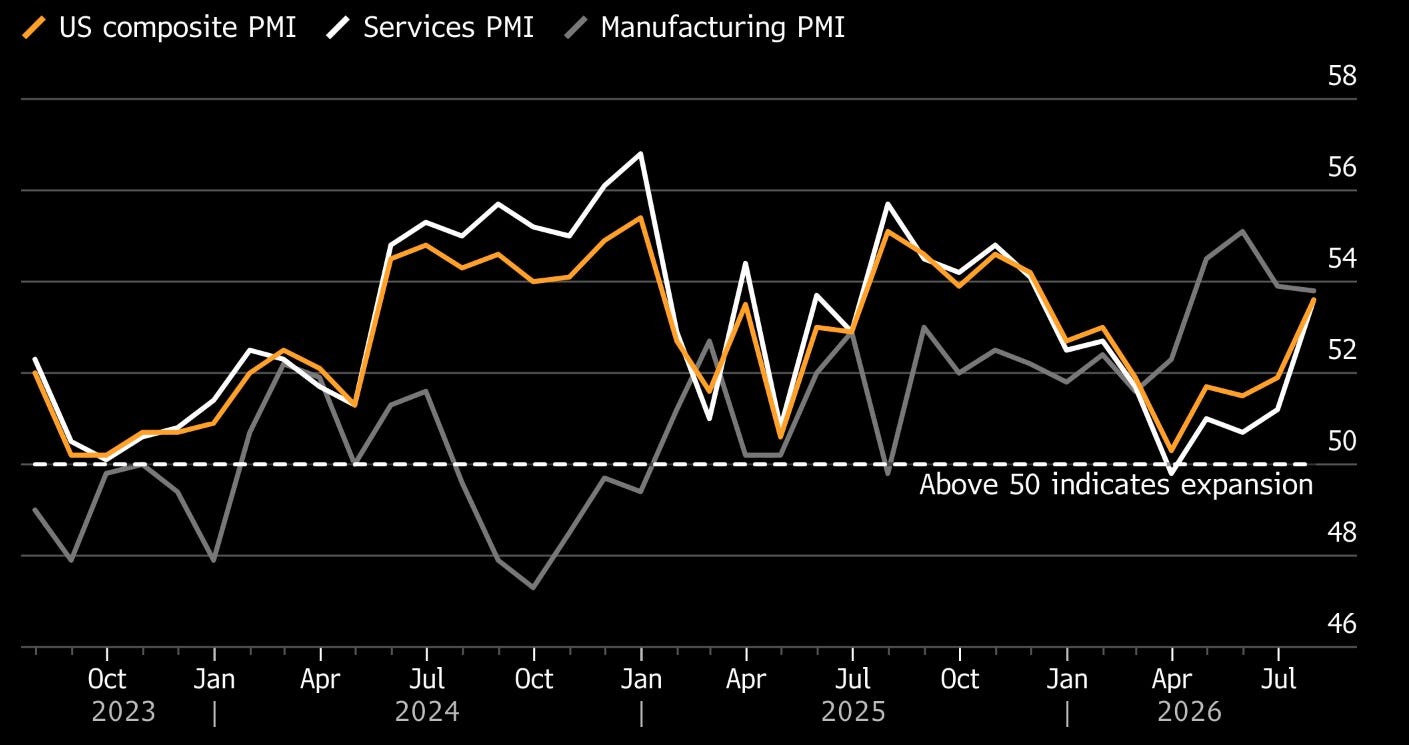
Initial jobless claims fell to 187,000, materially below the 212,000 consensus. The July services PMI rose to 53.6, manufacturing remained expansionary at 53.8, and new-home sales increased to an annualised 628,000. The Conference Board’s leading index was softer, declining 0.2%, but the higher-frequency activity data continued to point toward expansion rather than contraction.
The composition was important. The composite PMI reached an eight-month high, with services supported by tourism, sporting events and America’s 250th-anniversary activity. At the same time, firms reported some of the strongest selling-price increases in almost four years. That is a difficult combination for the Fed, activity is holding up, but the inflationary consequences of tariffs, energy and supply disruption are becoming harder to dismiss.
Housing remained the more mixed part of the economy. New-home transaction volumes improved, but the median price fell to $398,300, down 2.7% from a year earlier, while the stock of homes for sale remained elevated at 485,000. Housing is therefore not delivering a clean reacceleration signal. Demand is functioning, but builders still need to compete on price and incentives.
The macro message was consequently not “reacceleration” in the broadest sense. It was continued resilience with less room for an adverse supply shock. Growth has not broken, but oil, tariffs and tighter financial conditions are arriving at a point when inflation remains too high for policymakers to provide an easy offset.
Below I dive in to the macro action of the week and the coming week and distil the focus point for the near term. Subscribe for access to all articles and a website dedicated to global macro with G6 curves, EQ, FI, FX and Commod models and analysis (www.globalmacromethod.com)
