Tomorrow’s FOMC decision is being framed as a binary contest between a routine hold and a credibility-enhancing surprise hike. That framing misses the more important point. The market has already decided that US policy is moving higher; what remains unresolved is whether Kevin “K-Dawg” Warsh chooses to front-load the adjustment or leaves it until September.
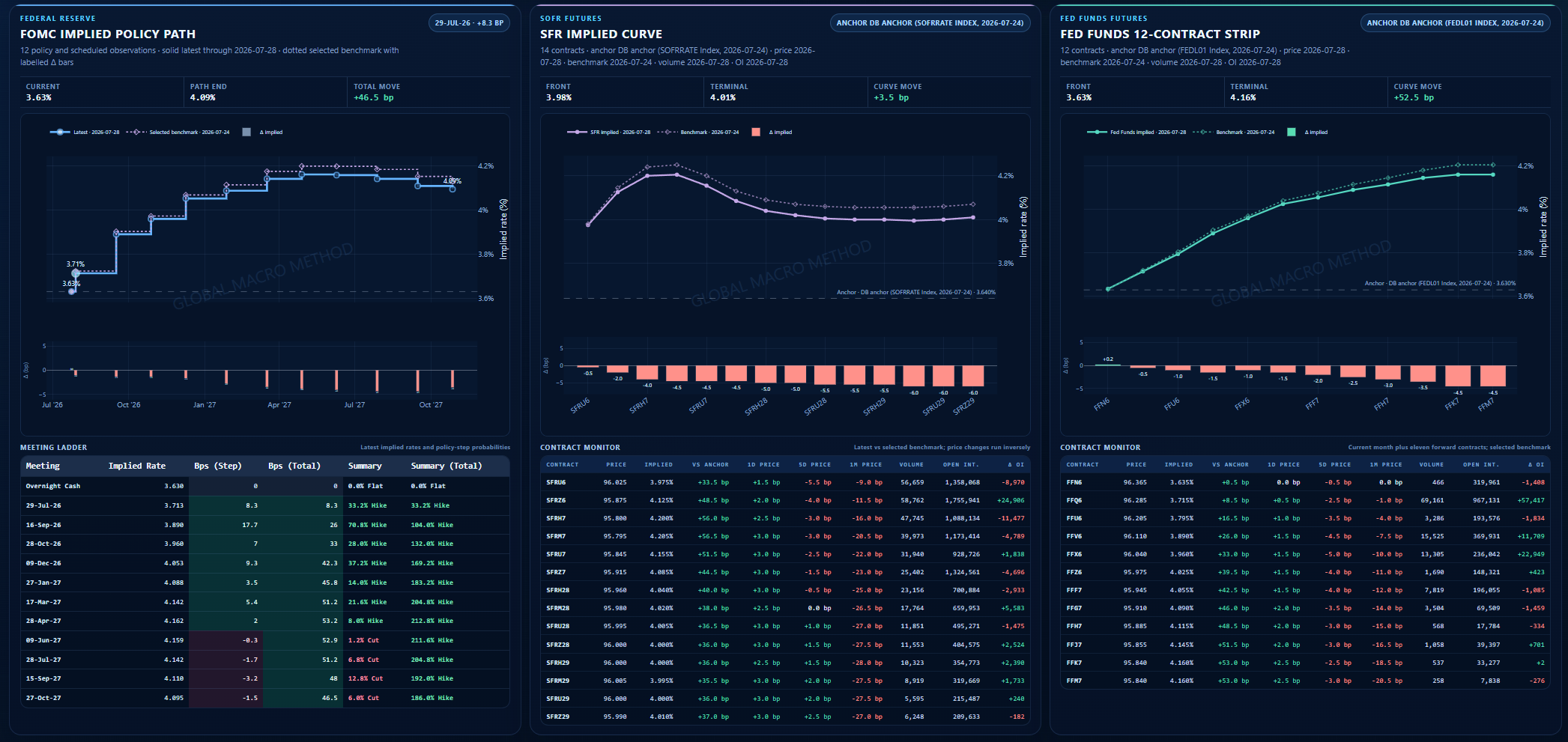
The dashboard (images below, soon to be added to the www.globalmacromethod.com site for paid subscribers) makes that distinction clear. The July meeting prices only 8.3bp of tightening, equivalent to roughly a 33% probability of a 25bp hike. Yet the implied rate rises to 3.89% by September, 4.05% by December and peaks near 4.16% next spring. Across the full fed funds strip, around 50bp of tightening is already embedded. The market is not debating the destination. It is debating the timing and, by extension, the Fed’s reaction function.
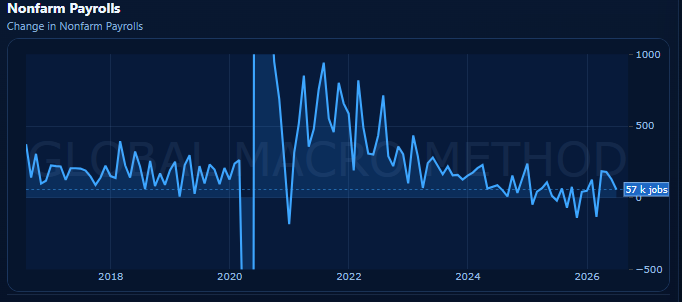
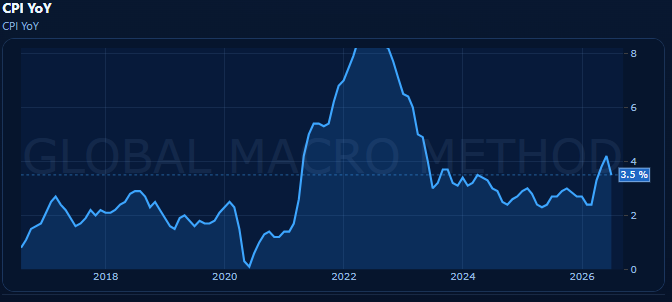
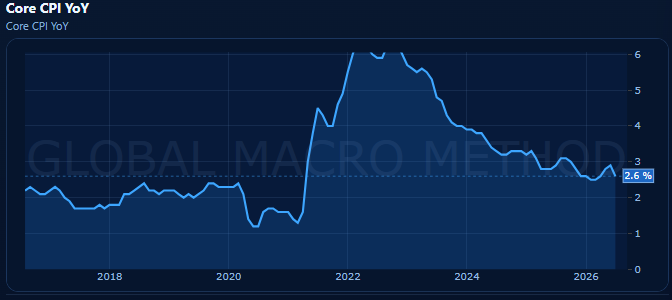
The incoming data give the Committee a defensible reason to wait. June payroll growth slowed to 57,000 while unemployment held at 4.2%. Core CPI was unchanged over the month and eased to 2.6% year on year, although headline inflation remained 3.5%. The apparent improvement also needs qualification: the monthly decline in headline CPI was driven heavily by a 5.7% fall in energy prices, leaving the Fed exposed if the latest Middle East-driven oil shock persists.
Interestingly a Citadel Securities research paper suggested a surprise-hike argument matters even if a hold remains the marginally more likely outcome. Warsh has spent his opening months promising that the Fed will “deliver price stability”. The June minutes already showed that upside risks to inflation were judged elevated, downside employment risks had moderated, and some participants saw a case for raising rates. The Committee also deliberately removed its previous easing bias.
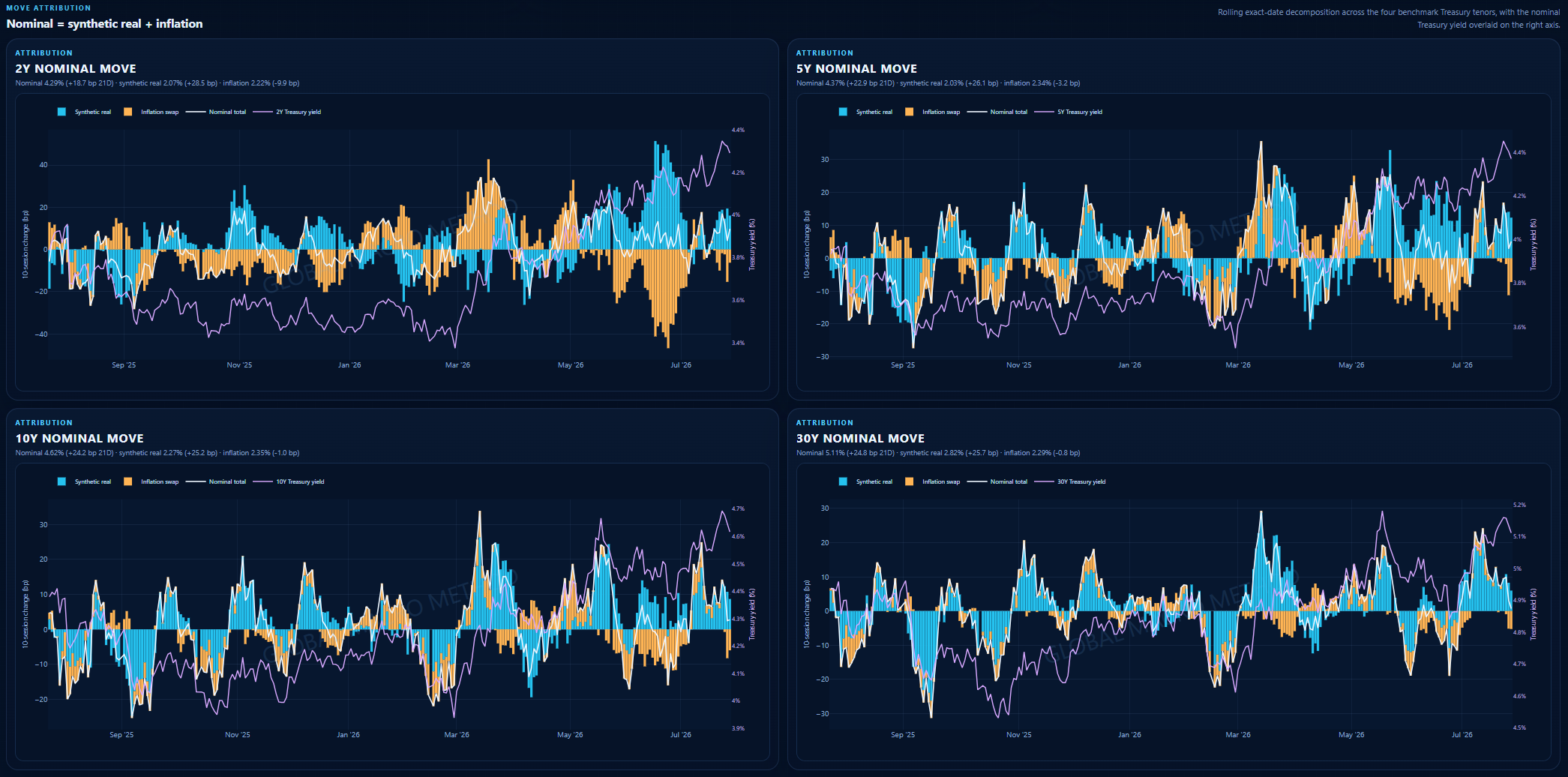
The strongest signal in the market is not the level of inflation compensation, but the rise in real yields. Over the past 21 sessions, the 2-year nominal yield increased 18.7bp even as the inflation component fell 9.9bp; the synthetic real yield rose 28.5bp. At 10 years, almost the entire 24.2bp rise in nominal yields came from a 25.2bp rise in real yields. Inflation swaps remain relatively contained around 2.22% at two years and 2.35% at ten years.