

The current selloff is smaller in price terms, but it reflects a deeper repricing of policy, real rates and the global cost of capital.
The clean takeaway from the latest global bond selloff is that it is nowhere near the scale of 2022.
Looking at the difference between 2022 and today on a rolling 20day performance global government bond yields have risen around 17 basis points, compared with more than 60 basis points during the worst phase of the 2022 rout. The peak-to-trough drawdown in global government bonds is roughly 4.2% this year, against more than 23% in 2022. Volatility is lower, coupons are higher and investors are earning considerably more income while they wait.
All of that is true…. and there is no sugarcoating it.
But comparing the current move with 2022 risks answering the wrong question.
The issue is not whether another generational bond crash is already underway. The more important question is why yields are moving higher when policy is already restrictive, growth data are becoming less consistent and government bonds once again offer meaningful income.
In 2022, markets were violently repricing the destination for interest rates from an almost-zero starting point. In 2026, markets are repricing how long restrictive rates may need to remain in place, how high real rates now need to be, and how much compensation investors require to absorb an expanding global supply of duration.
That is a less explosive process. It may also prove more persistent.
The current selloff is best understood as two overlapping trades, (1) an acute repricing of the Federal Reserve path at the front end, and (2) a structurally higher term-premium regime preventing the long end from rallying. The first determines the speed and shape of the move and the second determines the floor beneath yields.
The smaller drawdown is partly mechanical
The bond market entered 2022 with very low yields, small coupons and an enormous amount of duration risk embedded in portfolios. Investors had little income protection when yields rose, while the sudden change in central-bank policy generated large mark-to-market losses…. cough cough SVB…!
The starting point today is very different.
The average coupon in the global government-bond index is around 2.7%, compared with less than 1.9% in 2022. Higher yields also mean somewhat lower duration for otherwise comparable securities. Investors are therefore receiving a larger carry cushion against adverse price moves.
That explains why the total-return damage is smaller. It does not mean the macro consequences are trivial.
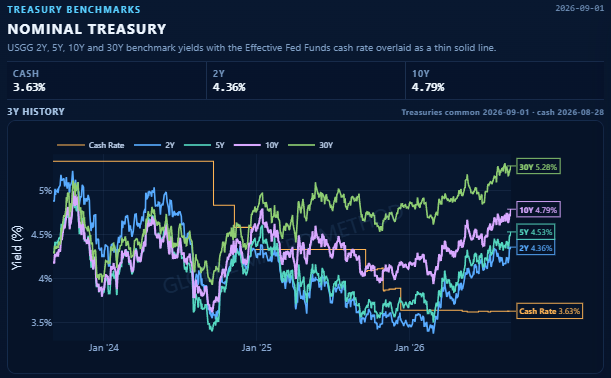
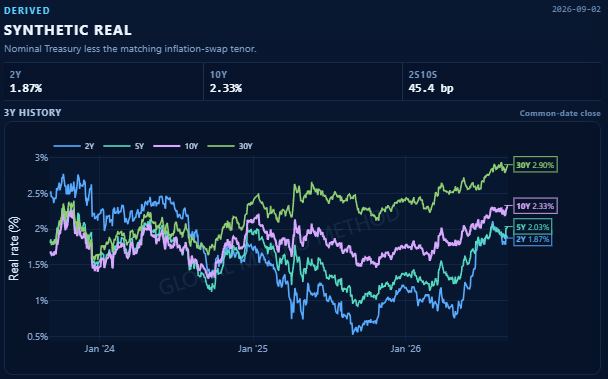
The US two-year yield is around 4.36%, the five-year around 4.53%, the ten-year around 4.79% and the thirty-year around 5.28%. More importantly, synthetic real yields are approximately 2.33% at ten years and 2.90% at thirty years.
A household, company or government refinancing at these levels does not care that the bond index is only down 4%. The economic transmission comes from the absolute cost of capital, not the percentage drawdown in an investor benchmark.
The distinction is simple:
2022 was about getting to restrictive policy. The current regime is about discovering how long the economy can carry it.
The market is not pricing one hike. It is pricing a new plateau.
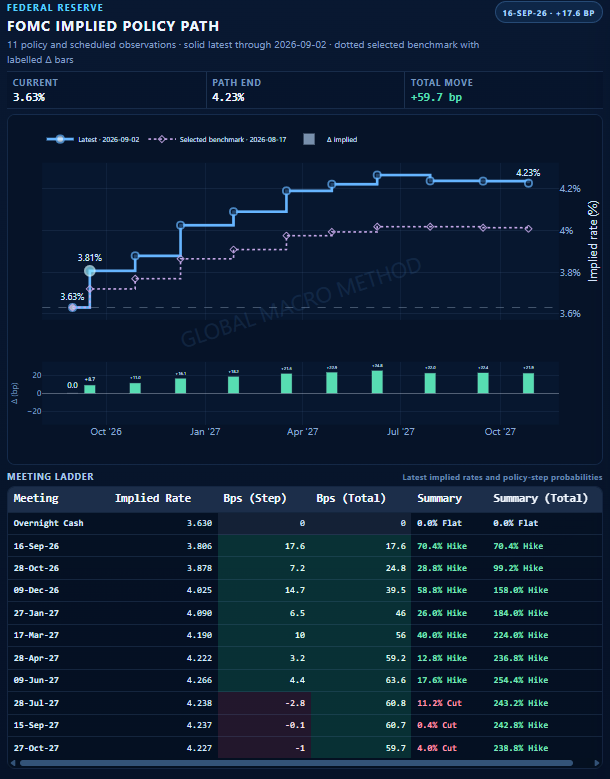
The current effective cash rate is approximately 3.63%. The implied Federal Reserve path rises toward 4.26%, representing close to 63 basis points of cumulative tightening.
Join up today and gain access (very tier of paid gains access) to the www.globalmacromethod.com website with G6 rates, fx and equity analysis, curves and models… plus my see my macro portfolio/book.
