

The following set of charts provides an overview of the current macroeconomic environment in the US. While these charts offer valuable insights, it's important to consider additional factors when assessing potential movements in equities or interest rates. Key influences include the political landscape, fiscal policy, system liquidity, credit availability, and geopolitical tensions.
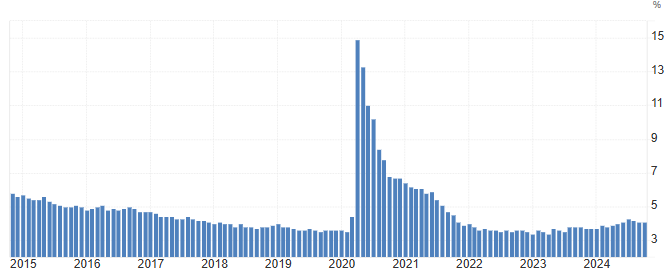
Unemployment - above 10yr average, and very marginally trending higher
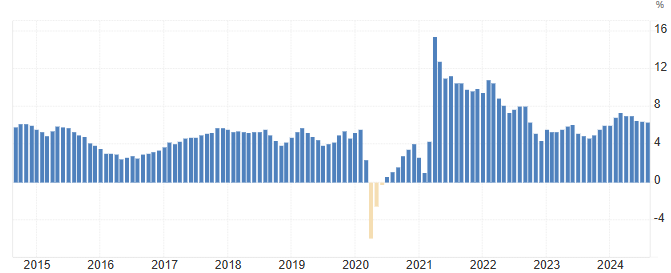
Wages Growth - above 10yr average, however appears to have settled down and trending lower
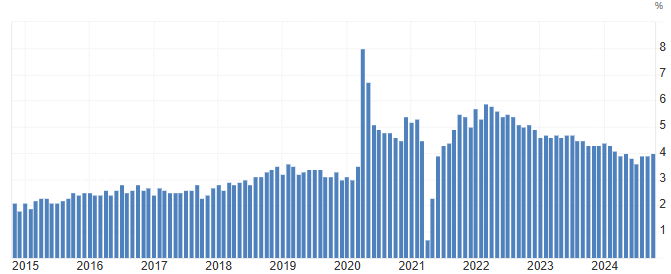
Average Hourly Earnings - Above 10yr average, recent trend is lower but might be stabilising at current levels
CPI (Headling) - Above pre-covid trend and appears to be rising
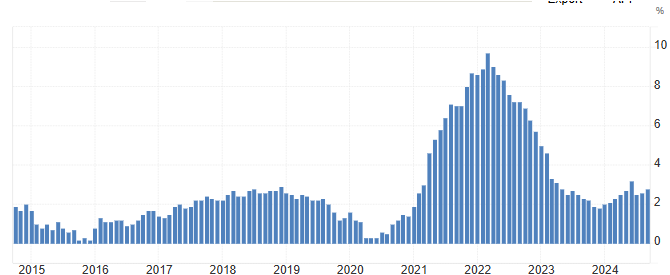
CPI (Core) - Trending above pre-covid average, service sticky above 2%
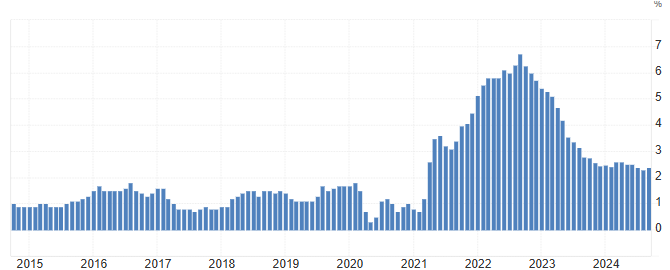
PCE (Core) - Trending above pre-covid average, service sticky above 2%
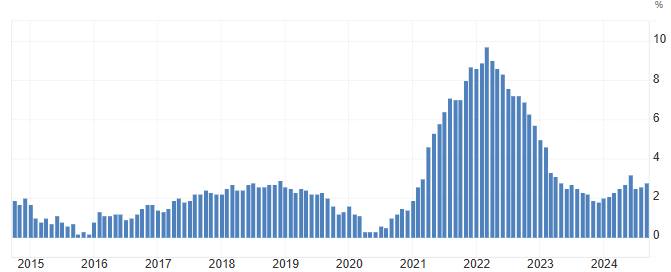
PPI - Inflation impulses are elevated and drifting slowly lower
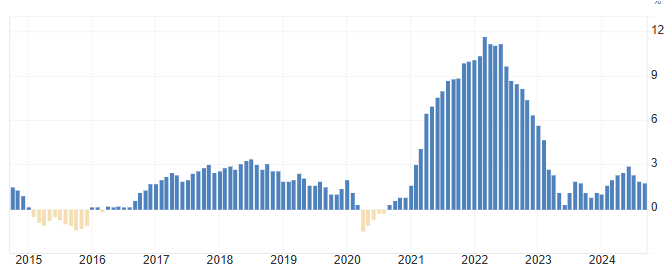
GDP - The annual GDP remains very resilient
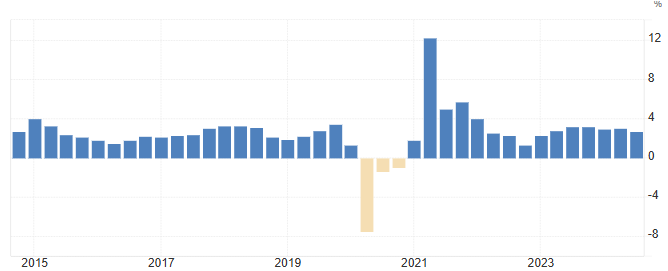
Retail Sales - Tending lower and marginally below 10yr trend
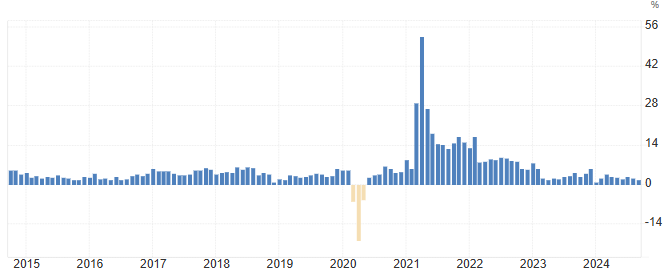
Household Savings - Slightly below 10yr average and trending lower
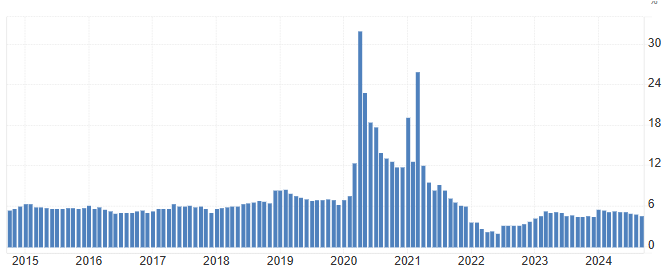
ISM Manufacturing PMI - Below pre-covide average and weakening into contractionary territory
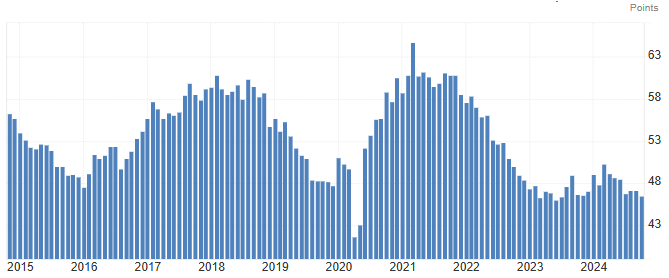
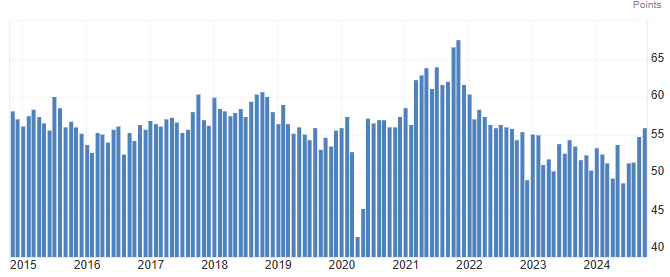
ISM Services PMI - Has been below 10yr average, more recently (post FOMC cut) it has lifted back to expansionary territory
Given this mix of data, the FOMC may face a complex decision:
Inflation Concerns: The upward trend in headline CPI, alongside persistent core inflation above target levels, may prompt the FOMC to remain cautious about easing policy too soon. The sticky nature of service inflation suggests that inflationary pressures could be more entrenched.
Economic Resilience: Strong GDP figures suggest that the broader economy remains resilient, which might support the case for maintaining a relatively restrictive policy stance to control inflation.
Labor Market Moderation: Softening unemployment and lower wage growth may relieve some pressure on inflation but could also signal that tighter policy might start to strain economic activity further.
Consumer and Manufacturing Weakness: Weakening retail sales and manufacturing indicate potential headwinds to growth, which could eventually weigh on broader economic conditions.
Appropriate FOMC Actions:
Maintain Current Rate or Slight Increase: The FOMC might opt to keep the current policy rate unchanged or consider a slight rate hike to continue addressing inflation risks, especially with headline CPI rising and service inflation remaining sticky.
Data-Dependent Forward Guidance: Emphasizing a data-driven approach could signal that the FOMC is prepared to adjust policy as needed. This would align with balancing inflation control against potential economic slowdown risks.
Current Pricing:
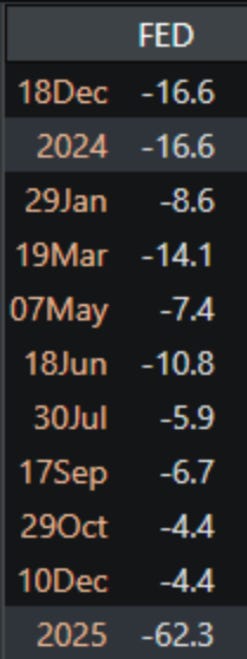
With -62.3bps currently priced into 2025, it would be strategic to fade the -70s and buy the -30s, assuming the data continues to align with expectations. However, considering the FED’s reaction function, which remains highly sensitive to labor market metrics and, to a lesser extent, inflation, this approach could provide a balanced risk-reward setup. Share your thoughts on Twitter (X) or in the comments/chat on this site.
So the trade is simple…. what is labor doing and where is inflation going? Next lets crack the tape and explore the measures within these.