The U.S. Rates Market Got an Inflation Refund, Not a Fed Pivot
The danger in U.S. rates is not that Treasuries are rallying. The danger is misreading why they are rallying.
Oil is lower, inflation compensation has cooled, and the immediate Hormuz premium has leaked out of front-end pricing. That is real macro relief. It removes one of the nastier risks for the Fed, a fresh energy shock that lifts headline inflation, hardens expectations, and forces policymakers to defend credibility just as growth sensitivity is rising.
But this is not a Fed pivot. It is an inflation refund.
The SOFR curve is no longer being asked to carry the same oil-shock insurance it carried at the peak of the scare. The market has reduced the probability of additional tightening, but it has not priced a proper policy release.
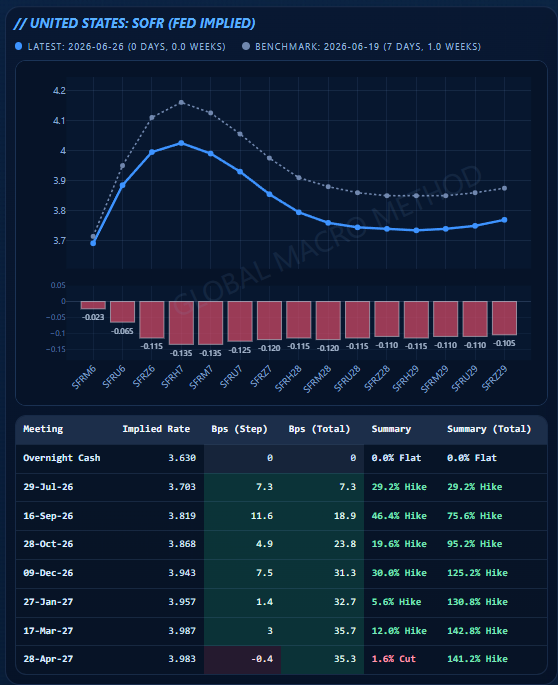
The Fed reaction function is why the move should be treated carefully. When oil rises, the Fed responds quickly because credibility is asymmetric. When oil falls, it does not immediately reverse the hawkish impulse. It waits for confirmation.
That leaves the front end in a policy-versus-data gap. The market can remove obsolete hike insurance before the Fed gives permission, but it cannot price a durable easing cycle unless the inflation sequence confirms that the shock has faded beyond energy, and where are not quiet there yet!
That is why the inflation-swap chart matters more than the nominal-yield chart. The front end of U.S. inflation compensation has cooled because oil is no longer behaving like a persistent supply threat. That helps Treasuries, supports receivers, and lowers the near-term policy tail.
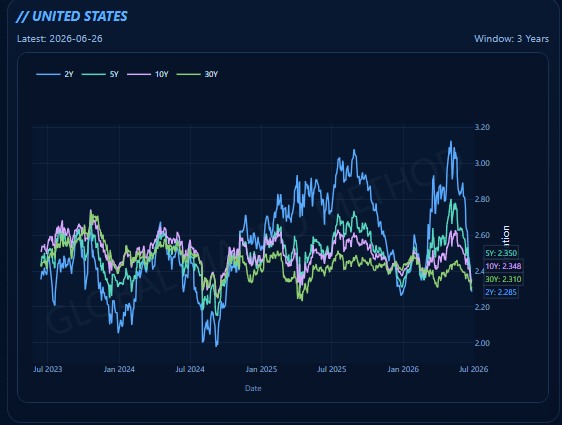
The unresolved question is whether this compression in inflation compensation can pull real rates lower. That decides whether the trade is a tactical front-end receiver or the start of a broader duration regime.
Join to gain access www.globalmacromethod.com and all research and trades. New models being deployed this weekend and next week.