

The current phase of the US rates market is defined by a tension between increasingly soft labour data and a market that remains reluctant to fully price what that softening implies for the Federal Reserve’s reaction function. Over the past several months, the accumulation of evidence has steadily pointed toward a more material weakening in the labour market, yet the market continues to anchor long-run forward SOFR rates around levels that imply a stable and relatively unchanged view of the long-term neutral rate.
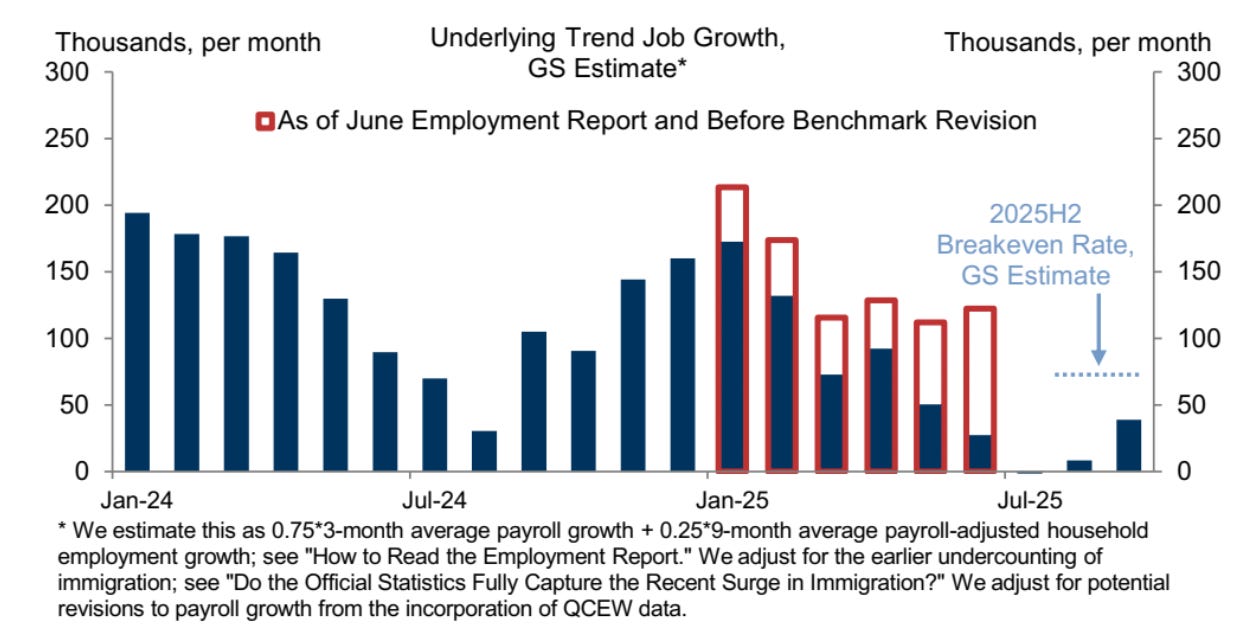
This combination creates a very specific opportunity in the front of the curve: cuts can be pulled forward without materially affecting the destination. The cleanest expression of this dynamic is the Dec-26 versus Dec-27 SOFR spread.
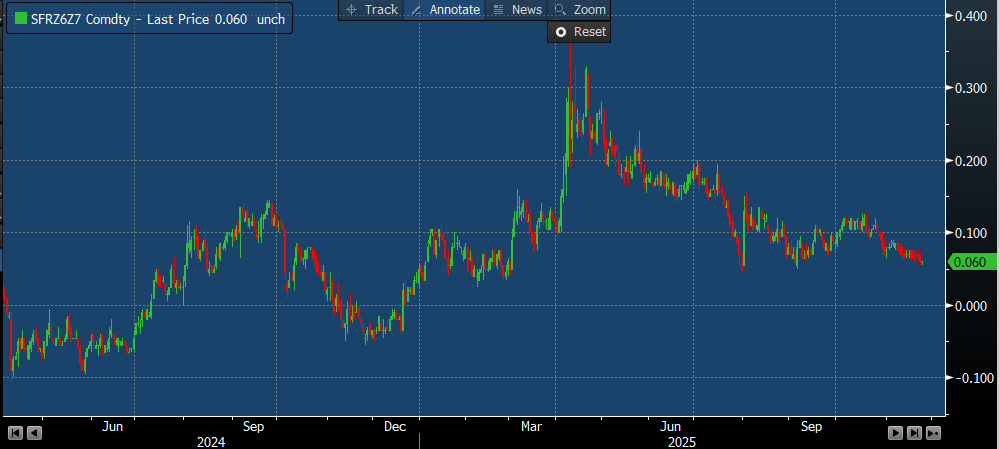
At its core, this trade seeks to monetise the idea that the Federal Reserve may eventually be forced to respond earlier than currently priced, even if the ultimate equilibrium rate does not shift very much. The Dec-26 contract is highly sensitive to any additional labour-market weakness, any deterioration in cyclical momentum, or any fresh acknowledgement from the Fed that conditions are softening in a persistent, broad-based way. By contrast, the Dec-27 contract largely reflects long-run equilibrium assumptions, and these assumptions have proven remarkably sticky through a wide range of data surprises. The relationship between these two contracts therefore becomes a very clean way to isolate the “front-loading” component of a prospective cutting cycle without taking undue exposure to longer-run rate convergence.
