

25 October 2026. Reviewing 19–23 October; looking ahead to 26–30 October.
The week that was…. The growth story gets a funding bill
By Thursday, it was tempting to look at tech getting smacked and bonds rallying and decide the recession trade had arrived. Then the rest of the market rather rudely complicated things. Over the full week, the Nasdaq lost 0.7% while the Russell 2000 gained 2%. That doesn’t rule out trouble ahead, but it makes a blanket growth panic harder to argue. My read is that investors are getting more selective about which growth they want to pay for, and how much funding that growth will need.
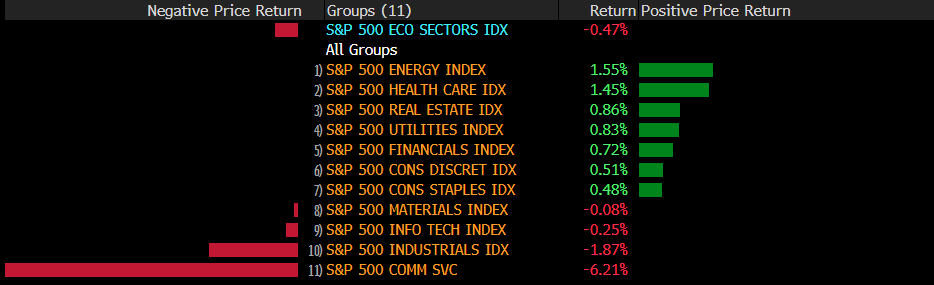

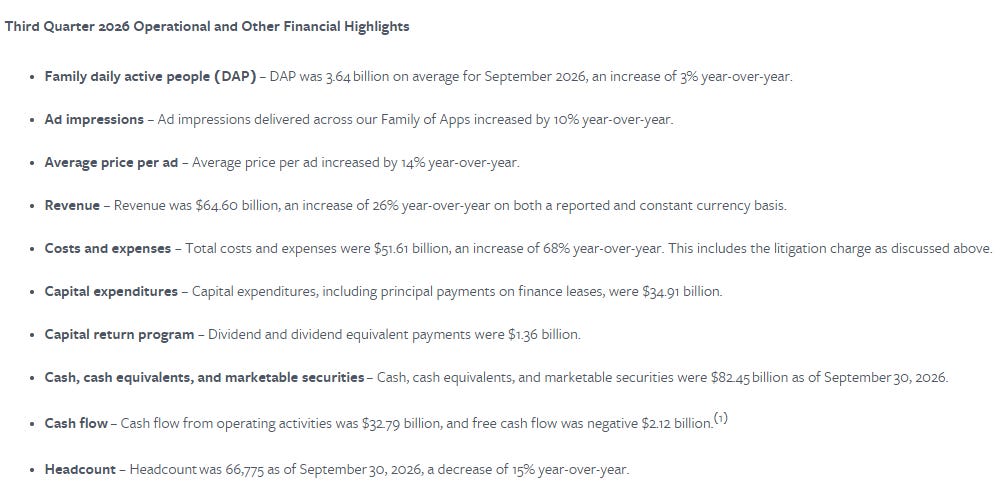
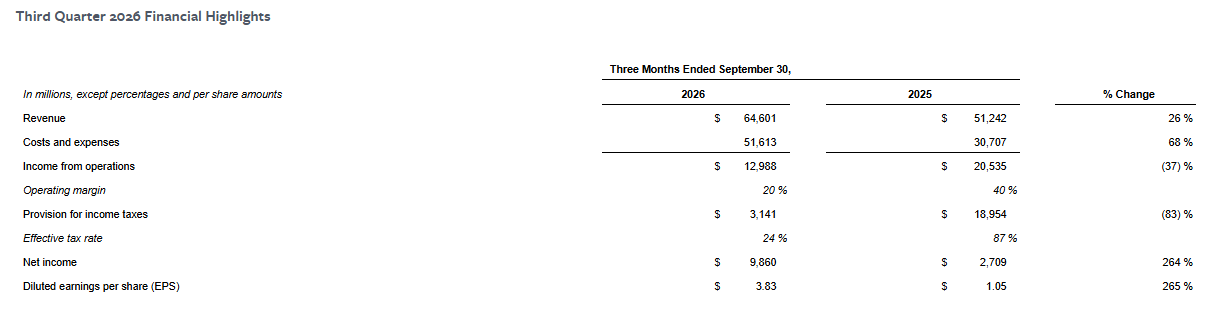
Meta gave that concern some proper numbers. Revenue rose 26%, yet capital spending of roughly US$34.9bn exceeded operating cash flow of US$32.8bn. That is a very successful business writing a very large cheque. Its spending guidance still points to enormous investment, so we shouldn’t jump from a falling share price to assuming the data centres have been cancelled. The pressure is on the return investors expect from those commitments. If financing becomes more expensive and shareholders become less patient, management eventually has to respond. That is where an equity valuation problem can turn into a macro problem. The test for businesses is the total borrowing cost. Wider credit spreads can offset lower government yields, leaving borrowers with little relief even while Treasury holders are celebrating. That is why I’m watching funding conditions alongside equity prices.
The bond move was revealing too. On the Treasury’s daily curve, the 10yr finished at 5.00%, down nine basis points over the week, while its inflation-adjusted yield fell eight. The gap between the two, a rough measure of inflation compensation, barely moved. That isn’t a clean signal that inflation has been beaten. My interpretation is that investors wanted more protection against disappointment in future growth and returns. The longer end also outperformed the 2yr, which fits a market buying protection beyond the next few Fed meetings more comfortably than it fits an imminent policy retreat.

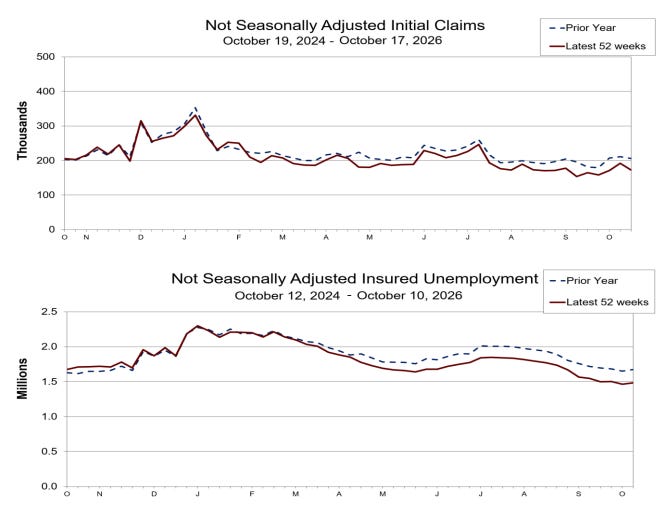
And the current US data still pushes back against the gloom. Initial jobless claims fell to 194,000, while October’s flash business survey showed activity expanding strongly and selling-price pressure accelerating. Neither says the economy is suddenly falling apart. I’m happy to own bonds ahead of weaker growth, but I don’t want to pretend the weakness has already arrived just because the position had a good Thursday. The distinction matters: a market can correctly identify a vulnerability and still get well ahead of the economic evidence.
Oil makes that judgement harder. Brent ended Friday near US$117 as renewed Middle East supply fears pushed prices higher. Persistently expensive energy takes spending power away from households while keeping pressure on measured inflation. The Fed can therefore become more worried about growth without gaining much freedom to ease. That is the awkward combination carrying into next week: the economy still has momentum, parts of the investment boom are facing harder questions, and the inflation problem hasn’t politely disappeared to make the bond trade easier.
Paid membership gives you access to the GMM website’s dashboards and tools, my macro research and educational series, trade ideas and portfolio updates, plus our private Discord to ask questions, challenge the thinking and talk through markets together.
You can follow what I’m watching, where I see an opportunity, how I’m putting risk on and what would change my mind. It’s all designed to help you build a clearer process of your own. Some days that means taking a trade. Other days it means leaving the bloody mouse alone.
Subscribe to keep reading and get access to everything above.
